MAS Public Realm Action Plan for a More Livable City
Recommendations for the Mamdani Administration
MAS looks forward to working with the Mamdani Administration to advance our shared goals of an affordable and inclusive city—a livable city for all New Yorkers.
To achieve these goals, the City must foster a long-term vision for New York that centers the public realm as critical infrastructure by strengthening the quality and accessibility of our shared spaces through design, delivery, and maintenance.
We commend the Administration’s focus on affordability, support of comprehensive planning to meet our housing needs, and the pledge to allocate one percent of the City budget to NYC Parks, issues MAS has long championed.
It is equally important to improve New York City’s public realm—expanding access to public open spaces, creating well-designed streetscapes, and building resilient infrastructure to support growing and thriving neighborhoods.
-
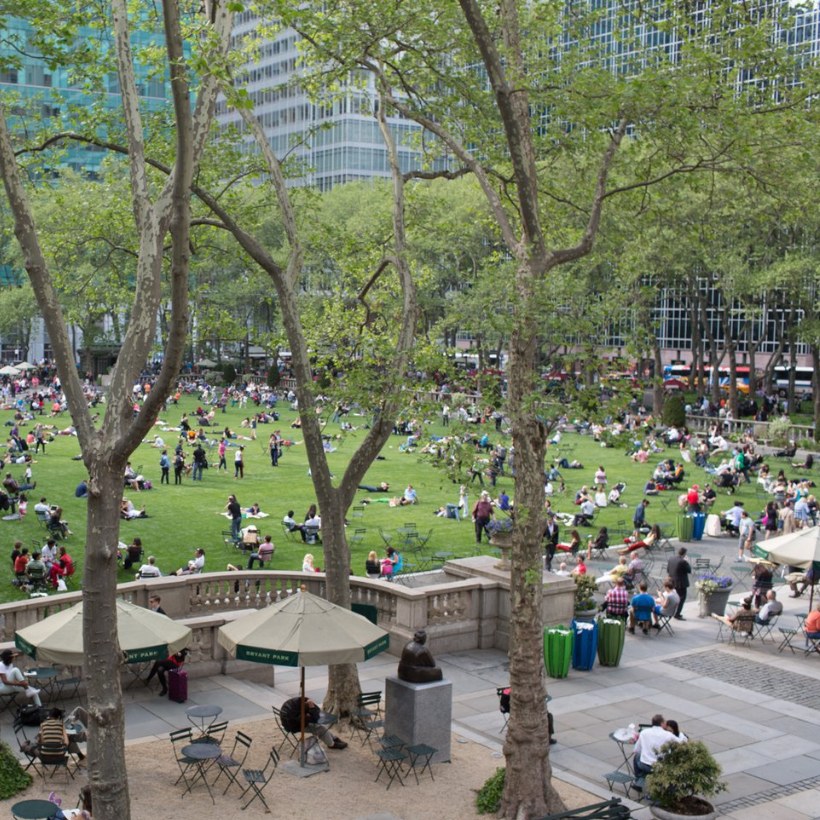
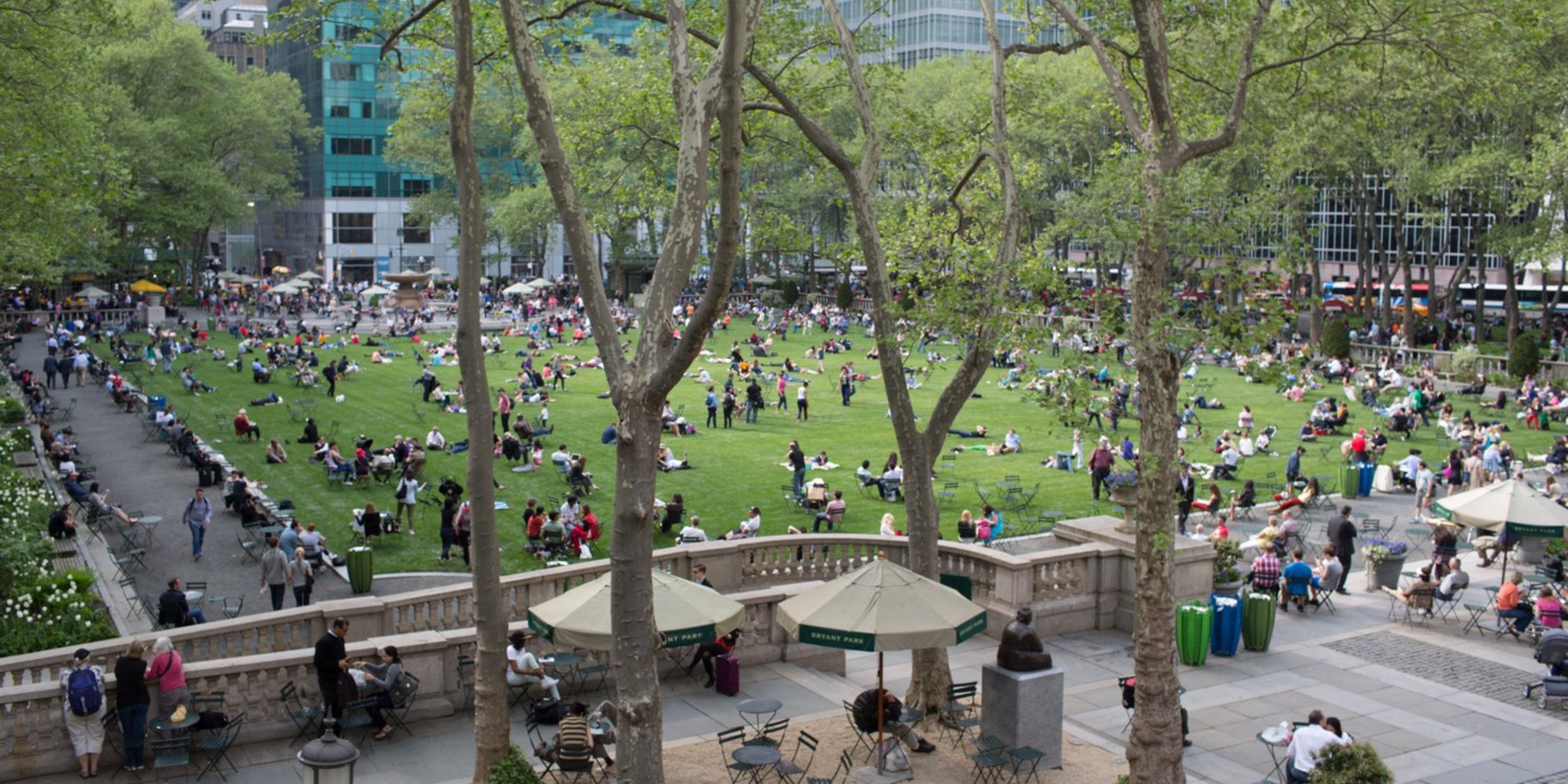 People enjoying Bryant Park on a sunny day. Photo Credit: Project for Public Spaces.photo 1 of 2
 -
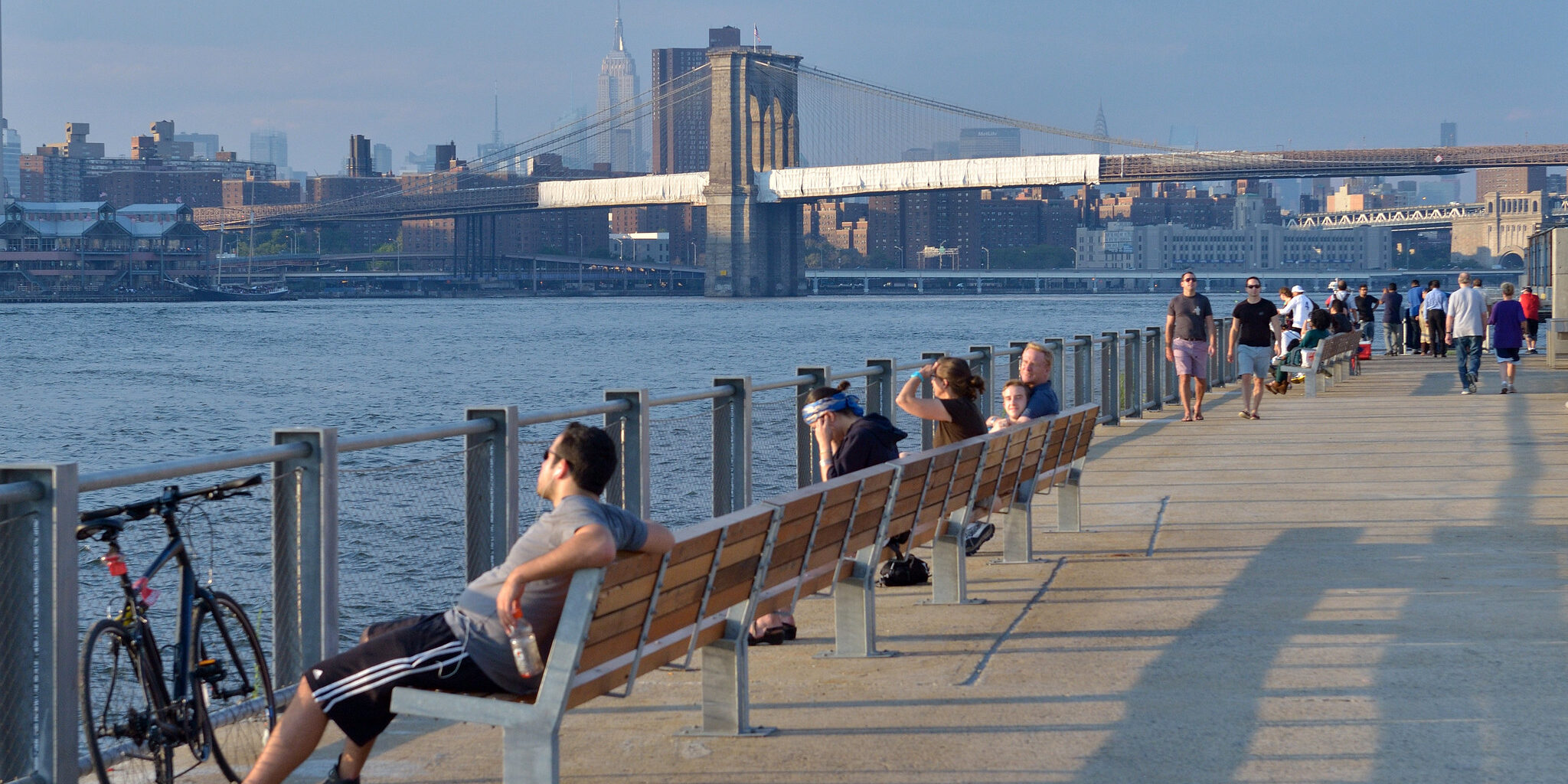 Brooklyn Bridge Park. Photo Credit: Flickr, Steven Pisano.photo 2 of 2
The Mamdani Administration has several tools at its disposal to fulfill these needs for New Yorkers. Here are five ways to hit the ground running:
1. Leverage City-owned Sites to Deliver Housing and Public Space
Make the most of new housing on City-owned land by incorporating improvements to adjacent public spaces.
There are thousands of City-owned sites, many of which are being planned for new housing, and many of which have critical public realm adjacencies. A prime example is the forthcoming project at 100 Gold Street and the Brooklyn Bridge underpass to Gotham Park. The City can maximize the potential of these projects for community benefit by delivering quality public space for our neighborhoods alongside planned housing units. By encouraging cross-agency collaboration beginning with scoping and procurement, the City can harness these sites to do more for the surrounding community. Public space must be considered in partnership with unit counts to ensure we are achieving a livable affordability agenda. Employing reforms across design, delivery, and bureaucracy will enable holistic thinking and seamless integration of these projects so that the City can create win-win solutions for our housing stock and public space.
2. Commit to a Comprehensive Public Realm Plan
Alongside housing, create a comprehensive plan for public spaces to center equity, address our climate goals, and improve public health.
Comprehensive planning will help meet housing goals and improve access to quality public spaces for all New Yorkers. An up-front and holistic evaluation of our public realm is critical to understanding the impacts of existing infrastructure and resulting neighborhood disparities, as well as understanding how to improve the planning, design, delivery, and maintenance of the public realm. Employing a comprehensive evaluation will enable government to center equity across all five boroughs and take action to address climate change, boost public health, and create a more livable city. Integrated approaches can maximize co-benefits, from improving our air quality to delivering accessible open spaces, where people can congregate, socialize, play, and thrive near where they live. Borough President Reynoso showed how this approach can be tackled at a borough-level; this model can be scaled up and given implementation power. As longtime advocates for citywide comprehensive planning and a member of the Thriving Communities Coalition (TCC), MAS looks forward to working with the Administration on developing these ideas to deliver more livable, affordable neighborhoods anchored with our public spaces.
3. Re-envision Our Streets for People
Pilot multimodal climate corridors with inclusive people-centered solutions to improve transit, environmental conditions, and the public realm across the city for cleaner, greener streets.
Building on the momentum of the Administration’s support for faster and free buses and multimodal street redesigns, now is the time to pilot roads that center people and bolster climate solutions. As the Administration focuses on long-overdue projects like McGuinness Boulevard and expands upon the success of the 14th Street Busway, MAS urges innovative visioning and big picture thinking across the city. By piloting multimodal climate corridors that can support multiple methods of transit, improve air quality, reduce noise, and mitigate climate impacts through improved stormwater management, the City can continue expanding people-centered street solutions in every borough. Ultimately, we envision these streets as a contiguous network of bike and bus-only lanes, supporting the Administration’s transit goals. Continuing our Greener Corridors for a Resilient City initiative, MAS looks forward to advancing ideas for transforming the city’s largest roads into models of sustainability, social cohesion, and equity.
4. Require Privately Owned Public Spaces (POPS) to Better Serve our City
Update the POPS program to ensure that these spaces are accessible and maintained to serve our evolving neighborhoods, meeting the needs of both people and climate.
The Department of City Planning (DCP) Privately Owned Public Spaces (POPS) program was last revised nearly a decade ago and has not received a major overhaul in over 20 years. These spaces comprise over 80 acres of public space in some of the most congested areas of our city and yet do not meet the contemporary demands of our communities. As formerly commercial neighborhoods like Midtown continue to add residential housing, both new and existing POPS will be increasingly relied upon to provide much needed public space. By updating the POPS program through both requirements for new spaces and oversight of existing, the City can better serve emerging mixed-use neighborhoods, mitigate the impacts of climate change, and meet the needs of diverse neighbors, ranging from places of respite for neurodiverse users to play areas for families. Further, the Department of Buildings (DOB) should be provided with tools to increase enforcement and ensure that building owners provide and maintain these public spaces.
5. Make it Easy for Community Members to Partner on the Public Realm
Cut the red tape to streamline onerous processes and requirements so that community partners can effectively utilize and enrich our public realm.
The streets, parks, and plazas of New York City are our civic commons, but due to complicated permitting and insurance requirements, community partners struggle to activate and enrich our public realm with block parties, Open Streets, arts and cultural events. Many of the rules for these convenings have not been updated in decades and no longer reflect how New Yorkers use them today. Further, layers of legislation and process have made the entry points to these systems opaque. The City must cut the red tape and make it easier for community members, starting with streamlining the permitting process within the Street Activity Permit Office (SAPO) and reducing insurance requirements for small programs. These reforms will help the City use time and resources more effectively and provide opportunities for groups to deliver public programming that support their communities.
How can we get this done?
To achieve these public realm goals in addition to an ambitious affordability agenda, the incoming Administration must foster a culture of collaboration within City agencies and center the public realm in City Hall leadership. Culture is key to setting the tone for more productive relationships across the maze of bureaucracy and with nonprofit and community partners to deliver projects and services across all five boroughs. Culture cannot be legislated, but it has the power to expedite lofty goals and directly impact citizens engaging with the public sector.
Capitalizing on the five neighborhood rezonings passed within the last four years, the Mamdani Administration has a unique opportunity to shape the delivery and enhancement of public spaces across the city. A proactive government culture is essential to creating a holistic vision for the public realm, and to create productive welcoming frameworks for community partners ready to collaborate.
Through strong policies and precedents that uphold our public spaces as critical infrastructure, the City can deliver livability with affordability, centering our communities and climate goals together, and laying the groundwork for a thriving public realm for generations to come.
Help us continue our policy advocacy of behalf of New York City.
Donate