Comments on the NYSDOT Cross Bronx Expressway Bridges Draft Environmental Assessment
VIA EMAIL
Re: PIN X727.07
Comment on Draft Environmental Assessments
January 9, 2026
Dear Governor Hochul, Commissioner Dominguez, and the NYSDOT 5 Bridges Project Team,
We are writing as local organizations impacted by the proposed Cross Bronx Expressway Bridges project (“5 Bridges”), as organizations whose missions and constituencies the project will impact for generations, and allied partners.
We understand and support the need to address the aging Cross Bronx Expressway (CBE or “Cross Bronx”) infrastructure in the portion of the highway between Boston Road and Rosedale Avenue. We offer these comments – informed by the same community knowledge that has led visionary and successful community-based planning for 50 years – as guidance. This moment presents a key opportunity to accomplish the repairs while addressing the transportation, climate, and environmental harms that the Cross Bronx has created and continues to inflict by tackling related transportation issues in the area. Widening the Expressway should play no part in this repair plan.
In summary, we are calling on you to:
● Abandon plans to widen the Cross Bronx Expressway and issue the findings that require NYSDOT and FHWA to pursue a full Environmental Impact Statement. Such an examination should evaluate alternatives that do not widen the CBE footprint and that reduce Vehicle Miles Traveled (VMT). It should include a full and fair assessment of environmental impacts, including a cumulative analysis that incorporates impacts on public health.
● Correct errors and omissions in the draft EA document and public review process
– Extend the comment period to 90 days to allow for a fair opportunity for the public to understand and comment.
– Correct the errors in the draft EA, remove references to removed Options, and reissue the document.
– Expand the project area to include the omission of East 177th Street.
● Meaningfully engage community and agency partners in preparing for construction and mitigations
– Prioritize the health and wellbeing of local residents and park users during the period of construction.
– Engage the MTA in creative solutions that make the most of available land.
– Commit to a formal agreement regarding construction period guarantees before a final decision on the project is concluded, setting up community consultation and accountability mechanisms.
The CBE cannot be expanded if we truly intend to Reimagine the Cross Bronx
This repair project – and any project along the Cross Bronx corridor – comes with the imperative to ensure that public investment turns away from outdated, harmful planning paradigms and embraces forward-looking sustainability goals informed by the local community. Widening – by at least 29 feet – the most notorious highway in the country is unnecessary and will inflict further irreparable harm on the local community and ecosystem. It should not be under consideration. The spirit behind and the initiatives detailed in Reimagine the Cross Bronx, the federally-funded, multi-year effort chronicling the extent of the roadway’s harms and the urgent need to change course, must be incorporated into all planning and implementation for the corridor.
Problematic aspects of NYSDOT’s currently proposed alternatives
All the proposed alternatives (A,B,C) significantly expand the footprint of the mainline Cross Bronx Expressway, inducing traffic and its attendant impacts – air pollution, congestion, and noise. Widening adds impervious surface, generates more stormwater runoff and pollution, and worsens the urban heat island effect.
Alternative C widens the mainline of the Cross Bronx Expressway by 29 feet and adds additional lanes on access ramps and merging areas despite no requirement to do so. NYSDOT fails to justify how these changes will accomplish safety.
Recent experiences of highway widenings done in the name of “safety shoulders,” such as on the Bronx River Parkway, have had the opposite intended effect, with drivers aggressively using the new space for travel while also experiencing stop-and-go pinch points when the geometry of the roadway returns to its typical width outside the “improved” section. The EA itself shows that the project overall will induce traffic and fail to improve flow in the long run, outcomes that any layperson can identify as failures, not justifications for widening. NYSDOT should analyze which crash reduction strategies it can employ without increasing vehicle miles traveled (VMT) or widening the roadway, including tolling for through-traffic (non-local) drivers, and an analysis of reducing the travel capacity of the roadway to two lanes in each direction.
Alternatives A and B add 49 feet – adding heat and shadows to the parkland and river habitat, as well as increasing the need to manage stormwater. A shared-use path (SUP) along the CBE fails in its stated goals because of the undesirability generated by its proximity to the highway’s air and noise pollution, inclines, circuitous length, and isolation. The dangerous intersection points of its proposed entrance and exit further compromise its utility.
Alternative B, a SUP with a connection to Starlight Park, is the worst offender, destroying existing green space in Starlight Park, creating a visual eyesore, and employing extreme contortions to jam in a connection to a pathway that the community has repeatedly opposed. In so doing, it all but assures that existing land uses will persist into perpetuity, locking in designs that are incompatible with the ecological well-being and the potential for community development in the area.
Download Testimony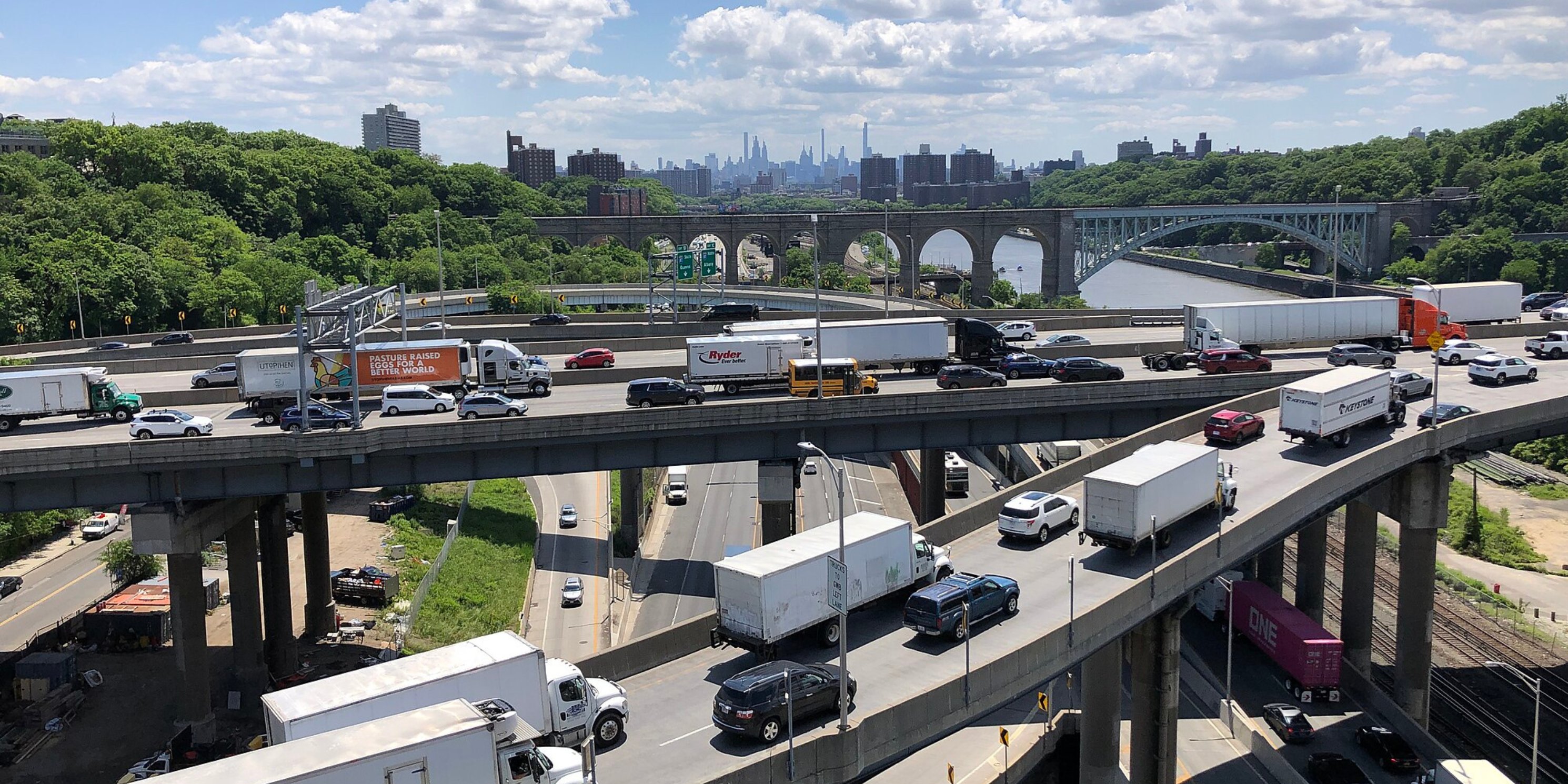
Limited project scope excludes community – generated options
existing corridors on E 174th Street, E 177th Street, West Farms Road, and E Tremont Avenue – and implementing these improvements is the best way to improve local travel for people across all modes and access needs.
Specifically, we call on you to include E 177th Street in the project area and to direct investment, in partnership with NYC DOT, to prioritize and improve the streetscape for pedestrians, cyclists, and transit users and to ensure that any traffic reduction benefits generated from the new access ramp connection between the Bronx River Parkway and the CBE are preserved into the future. Failing to reduce local street capacity means that the street will stay filled with cars.
We also call on you to partner with NYC DOT to make East Tremont a world-class transit corridor and to ensure that the 174th Street Bridge has robust, safe, and well-maintained connections to Bronx River Avenue and to Starlight Park for pedestrians, cyclists, and anyone for whom staircases present a mobility challenge.
Construction impacts from this project have been minimized in the draft EA and must be fully accounted for and mitigated. Starlight Park will be massively disrupted for staging activities, while the MTA surface parking lot is proposed to go untouched during that same period. We call on Governor Hochul and NYSDOT to engage the MTA to find creative solutions that best utilize all available land and that prioritize the health and well-being of park users during the period of construction. Similarly, the recent 2022 history of a NYSDOT subcontractor illegally dumping construction debris into the Bronx River does not inspire faith that NYSDOT will provide the proper oversight and community consultation during the construction period. NYSDOT should commit to a formal agreement regarding construction period guarantees before a finding on the project is concluded, in addition to setting up consultation and accountability processes once construction is closer to onset.
The draft EA is flawed, inaccurate, and insufficient in its accounting of impacts
The draft Environmental Assessment (EA) makes a number of critical omissions leading to the improper evaluation of the proposed alternatives.
First, the suite of widening and geometric changes that accompany all the alternatives are unhelpfully bundled together, preventing an in-depth examination by the public. Changes are not presented according to each feature, and a rationale for what each change seeks to accomplish is not presented. This forces the public to grapple with them as a “take it or leave it” package, and prevents fair evaluation of the merits, pitfalls, and tradeoffs of each.
Second, the Project Area is improperly drawn and should be modified. Currently, it excludes East 177th and 174th Streets. E 177th Street, in particular, is a roadway that will be significantly impacted by the proposed actions.
Third, there are multiple places where the draft EA dismisses or minimizes the impacts on people and the environment. For example, the recreational import of a large swath of Starlight Park is dismissed based on a technicality. The portion of Starlight Park between 174th and 177th Streets is an active area where children recreate, people picnic at tables and on the grass, and children run and play games. Impacts to this area – during construction and otherwise – are substantial and require far greater mitigation – during the construction period and afterward – than the draft EA contemplates.
Similarly, the significance of the Bronx River for both people and habitat is dismissed. Ecologically, it is classified as a “man-made structure” and its value is deemed as providing “minor recreational use.” Such a description would come as quite a surprise to the more than 1,200 Bronx families and visitors to NYC who utilize the river for recreational paddling from May through November. The Bronx River is a vital natural asset in heavy use, was reclaimed from dumping and disinvestment, and deserves protection and investment.
Furthermore, proposed mitigations for the nearly 300 trees that the project will cut are wholly insufficient. There is no plan for transplanting the trees and no special accounting for the maturity of the forest that will be destroyed.
NYSDOT dismisses impacts, such as air quality and noise, simply because they do not have a suitable way to address such impacts. Relying on the abysmal status quo as the baseline, NYSDOT draws the conclusion that the community merits no additional efforts because they should be used to the environmentally unsatisfactory conditions that they currently endure. Air quality in the area is already WORSE than national standards, and it will remain so after the project is complete. Noise impacts will not be mitigated during or after construction.
Fourth, references to alternatives which have already been dismissed, formerly known as Option 1 and its subcategories, have not been fully removed from the document, making it confusing and inaccurate to read. Worse yet, the inclusion of outdated and irrelevant content calls into question the accuracy of the analysis on which the public is being asked to comment.
Fifth, the No Build Scenario is insufficiently described, making it impossible for the public to evaluate the merits or pitfalls of this alternative against the proposed alternatives. Methods for maintaining the bridges in operation without widening the highway are not described.
The Environmental Assessment should result in findings that lead to a full Environmental Impact Statement
The projects’ Draft EA is composed of a Draft NEPA EA, drafted by the Federal Highway Administration (FHWA) and NYSDOT, and a Draft SEQRA EA by NYSDOT. The federal NEPA EA narrowly frames the scope of the project around construction staging rather than environmental and health implications from the project, leading to just the few alternatives that do not consider short or long term air, climate, health or safety impacts from the project.
In addition to the Draft NEPA EA, NYSDOT is still obligated to undertake its own environmental assessment according to New York law. Under such laws – the State Environmental Quality Review Act (SEQRA), Environmental Justice Siting Law (EJSL), and the Climate Leadership and Community Protection Act (CLCPA) a determination that a full environmental impact statement is necessary is the only appropriate conclusion; anything less would be legally vulnerable.
In addition to the flaws noted above, the Draft SEQRA EA here does not meet SEQRA and the EJSL’s requirements to require further consideration of compounding effects of multiple pollution sources and stressors, and whether the project would cause or increase cumulative environmental and public health burdens borne by a disadvantaged community (“DAC”). According to these laws, an agency must prepare an EIS whenever there is a reasonable possibility that a project may result in significant adverse environmental impacts.
The SEQRA EA leaves out additional reasonable alternatives or mitigation measures to account for cumulative, short and long term impacts relating to air and water quality, traffic, noise, land use, health and safety on the surrounding DACs. And, despite the surrounding DACs’ known high rates of asthma, cardiovascular disease, heat vulnerability, and pollution-related morbidity, caused by the corridor being among the most overburdened in New York State, the Draft SEQRA EA does not account for existing community health, cumulative exposure, and baseline vulnerability and does not meaningfully analyze how the Project would compound those existing burdens.
The Draft SEQRA EA similarly fails to implement the climate and equity mandates of the CLCPA, which heightens the level of scrutiny agencies must apply when approving discretionary actions that impact DACs.
It does not quantify total project-level GHG emissions, does not model emissions associated with construction or long-term operation, and does not evaluate whether project emissions are consistent with or interfere with attainment of the CLCPA’s statewide emissions reduction goal. It then fails to analyze how project-related emissions, construction activity, congestion, and operational impacts would exacerbate the baseline conditions of elevated asthma prevalence, poverty rates, and health vulnerability over time.
Finally, NYSDOT’s insistence that the impacted communities and the public review and comment on the nearly 6,000 pages of technical information that make up the project’s Draft EA reinforces the need for a full EIS. Public engagement is not an “add-on” to SEQRA review; it is one of the ways agencies fulfill their obligation to take a hard look at environmental impacts and provide a reasoned elaboration for their determinations.
Thank you for taking these comments into account. We look forward to working with FHWA and NYSDOT to implement transportation solutions for this area that facilitate local and regional mobility while protecting the health and well being of local people and the environment, advancing climate goals, and planning proactively for future generations.
Sincerely,
Siddhartha Sánchez
Executive Director
Bronx River Alliance
Nilka Martell
Founder
Loving the Bronx
Kathy Park Price
Director, Advocacy and Policy
New Yorkers for Parks (NY4P)
Yancy Sanes
Teacher
Fannie Lou Hamer Freedom High School
Adrian Cacho
Senior Organizer
Open Plans
Eric McClure
Executive Director
StreetsPAC
Damon Gilbert
Equal Justice Fellow – EJ
New York Lawyers for the Public Interest (NYLPI)
Alia Soomro
Deputy Director, NYC Policy
New York League of Conservation Voters (NYLCV)
Akia Squitieri
Executive Director
Bronx River Art Center
Jessica Clemente
President and CEO
We Stay/Nos Quedamos, Inc
Rachel Spector
Deputy Managing Attorney, Northeast Regional Office
Earthjustice
Em Ruby
Advocacy and Policy Coordinator
Riverkeeper
Michelle Luebke
Program Manager
SWIM Coalition
Taylor Jaffe
Program Manager
Catskill Mountainkeeper
Robert Fanuzzi
President
Bronx Council on Environmental Quality (BCEQ)
David Abreu
Clean Water Advocacy Specialist
Save the Sound (StS)
Norma Saunders
President
Bronx River Houses Tenant Association
Julie Raskin
President and CEO
Waterfront Alliance
Jaqi Cohen
Director of Climate and Equity Policy
Tri-State Transportation Campaign
Anna Berlanga
Bronx and Uptown Organizer
Transportation Alternatives
Barbara Alicea
Executive Managing Director
THE POINT CDC
David Shuffler
Executive Director
Youth Ministries for Peace and Justice (YMPJ)
Diana Finch
Chair Bronx Park
East Community Association
Wanda Salamán
Executive Director
Mothers on the Move
Aleyna Rodriguez
Executive Director
Mary Mitchell Center
Sofia Barandiaran
New York & New Jersey Manager
East Coast Greenway Alliance
Stephan Edel
Executive Director
NY Renews
Lily Mleczko Buck
Director of Environmental Science and Justice
Rocking the Boat
Jack Gorman
Steering Committee member
Bronx Jews for Climate Action
Thomas E. Devaney, AICP
Senior Director of Land Use and Planning
The Municipal Art Society of New York
Kevin Garcia
Senior Transportation Planner
New York City Environmental Justice Alliance
Chauncy Young
Coordinator
Harlem River Coalition
Amy Ortiz, LMSW
Founder
Bronx Girl Bike Gang
Lanessa Owens-Chaplin, Esq.
Director, Racial Justice Center
New York Civil Liberties Union
Danny Pearlstein
Policy and Communications Director
Riders Alliance
Anhthu Hoang, PhD, Esq.
General Counsel/Deputy Director
WE ACT for Environmental Justice
Charmaine Ruddock
Project Director
Bronx Health REACH
Matthew Shore
Director of Planning & Development
South Bronx Unite
Hunter Armstrong
Executive Director / Co-Chair
Brooklyn Greenway Initiative / NYC Greenways Coalition
Kobi Ruthenberg
Partner and NY office Director
ORG
Danny Steiner
The Enchanted Garden at the JFKHS Campus
Help us continue our policy advocacy of behalf of New York City.
Donate