Data Distillery: Leveraging Public Land for Public Benefit
The future of City-owned land is on the ballot this Election. While MAS supports a “YES” vote on #1, #2, and #4, we urge you to vote “NO” on question #3.
Project Author: Wilson Barlow
Welcome to the MAS Data Distillery, a multimedia content series demystifying timely issues pertaining to New York’s built environment. From current planning projects to citywide issues, each installment uses publicly available data to clarify a theme or dilemma unfolding within our city.
Follow us @mas_nyc on Instagram for more from Data Distillery.
What does question #3 call for?On the ballot you will see: “Speed Up Street Safety Projects, Disposition of Unused City Property, Office Leasing”
MAS supports speeding up street safety projects and allowing the City to lease office space for its workforce with greater ease. However, fast-tracking the sales of City-owned lots without comprehensive review removes a critical guardrail that ensures public land is being used for public benefit.
This charter revision would exempt City-owned lots under 10,000 square feet from the Uniform Land Use Review Process (ULURP), instead moving them to the streamlined Expedited Land Use Review Process (ELURP). The change would remove the City Council’s final approval, placing it with the City Planning Commission instead.
Why does this matter?The Charter revision refers to New York City’s public land as “surplus,” which grossly underestimates the value and potential of City land. Public land is one of our most valuable—and finite—resources. Once sold or transferred, it can be difficult or impossible to reclaim.
Decisions about its future should be guided by a comprehensive, long-term vision for the public good, not simply by opportunities to generate revenue or expedite transactions.
What we found:MAS examined the lots under 10,000 square feet that would be eligible for faster disposition if this ballot measure were to pass.1
The City owns nearly 7,000 lots under 10,000 square feet. Many are currently vacant, while many others are in use for a range of applications—from small parks and gardens to public facilities to residential buildings. The data shows that these lots can be leveraged towards two of the city’s essential needs: green space and affordable housing.
How many <10,000 square foot lots are there across the city?
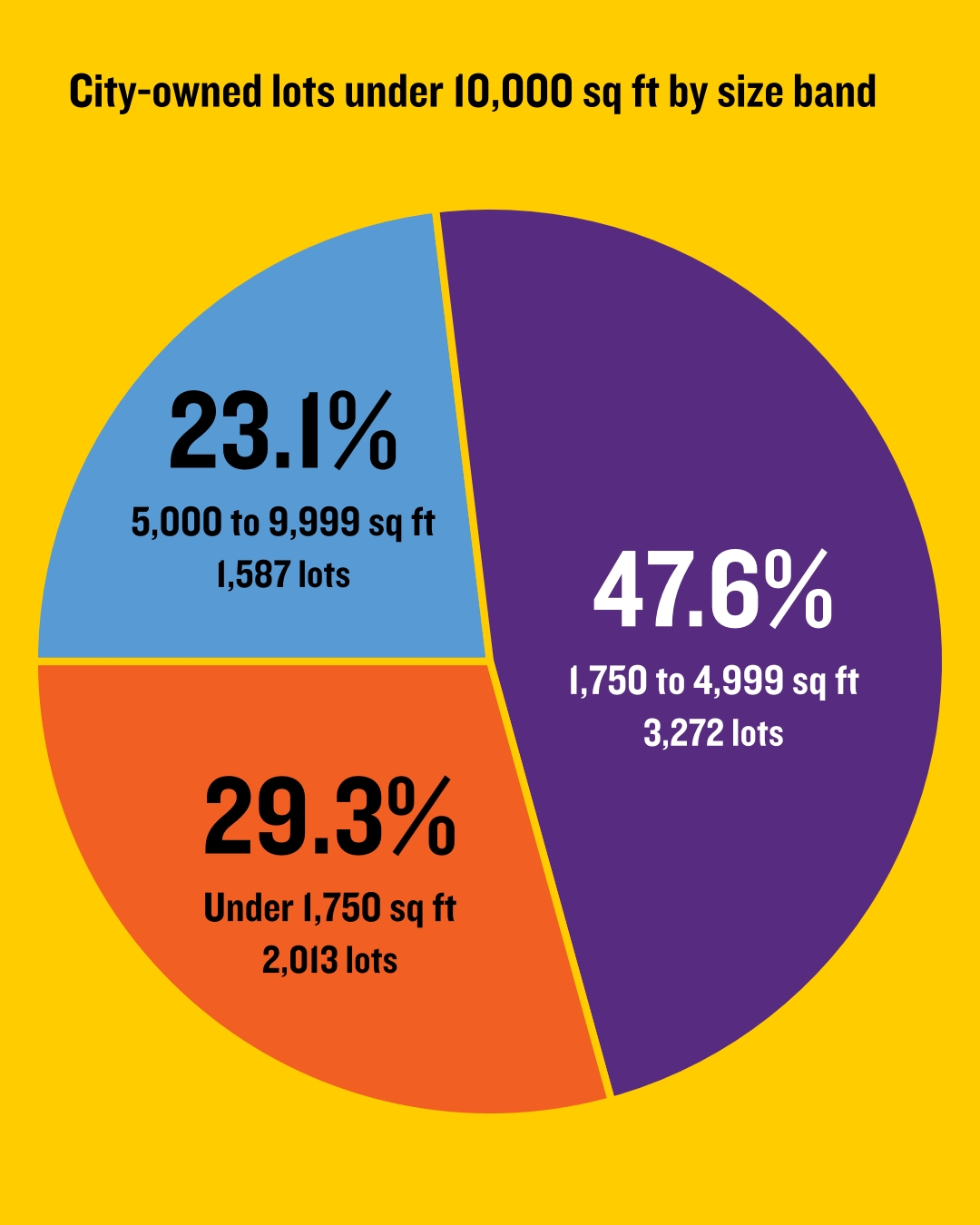
Among all City-owned properties, 56% are under 10,000 square feet, comprising approximately 6,800 total lots.2
What could be done with them?The 6,800 parcels that would be impacted by the proposed charter revision range in size.
- 1 in 4 are large enough to be converted into housing: These lots, which account for more than 1,500 parcels, are over 5,000 square feet in size.
- Over 3,000 could become pocket parks or community gardens: The bulk of properties that could be impacted are between 1,750 and 5,000 square feet, making them well suited for small- to mid-scale open space such as community gardens and pocket parks. Small-scale residential development is also possible for some lots of this size.
- Only 2,000 are too small for housing or typical open space: About a third are under 1,750 square feet, which are smaller than the smallest city parks and generally too small for residential buildings. The lots in this size range would be difficult to use without merging with an adjacent lot. But they could also be used for bioswales and rain gardens to address the City’s critical stormwater management needs.
Which City agencies currently own and operate the sites?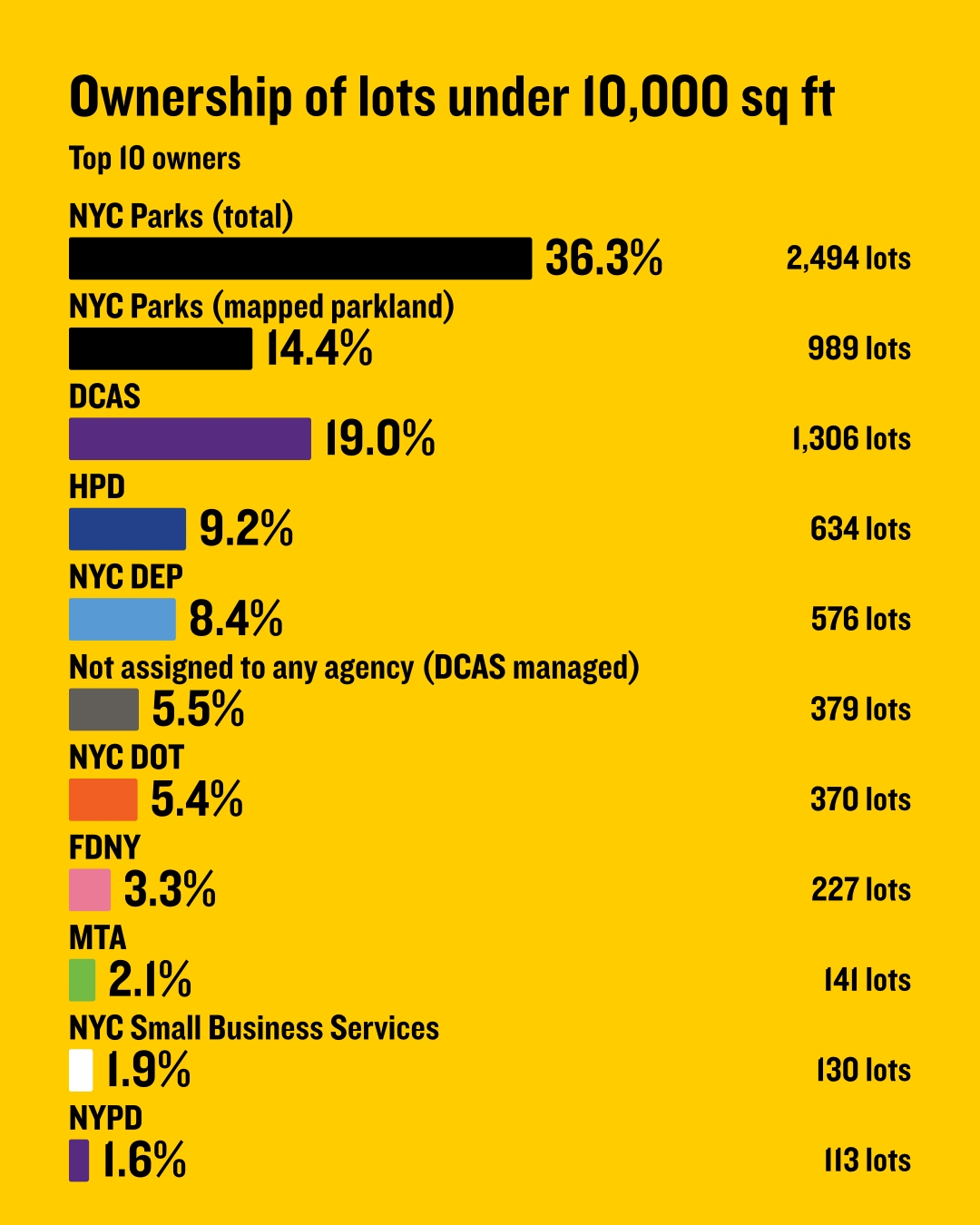
- NYC Parks is by far the largest owner of lots under 10,000 square feet (owning more than a third), followed by the Department of City Administrative Services (DCAS), Housing Preservation and Development (HPD), and NYC Department of Environmental Protection (DEP). Numerous other City agencies respectively own 5.5% or less of total properties.
- Some of the lots owned by Parks comprise mapped parkland, which is protected from sale, while others are either vacant or currently in use for outdoor recreation but lacking an official parkland designation. Over 1,500 Parks-owned lots (more than 50%) are not mapped parkland.
- DCAS is the agency primarily responsible for buying and selling City property. The approximately 1,300 lots under its ownership are the most likely to be sold first, while lots owned by other agencies may require a transfer to DCAS before sale.
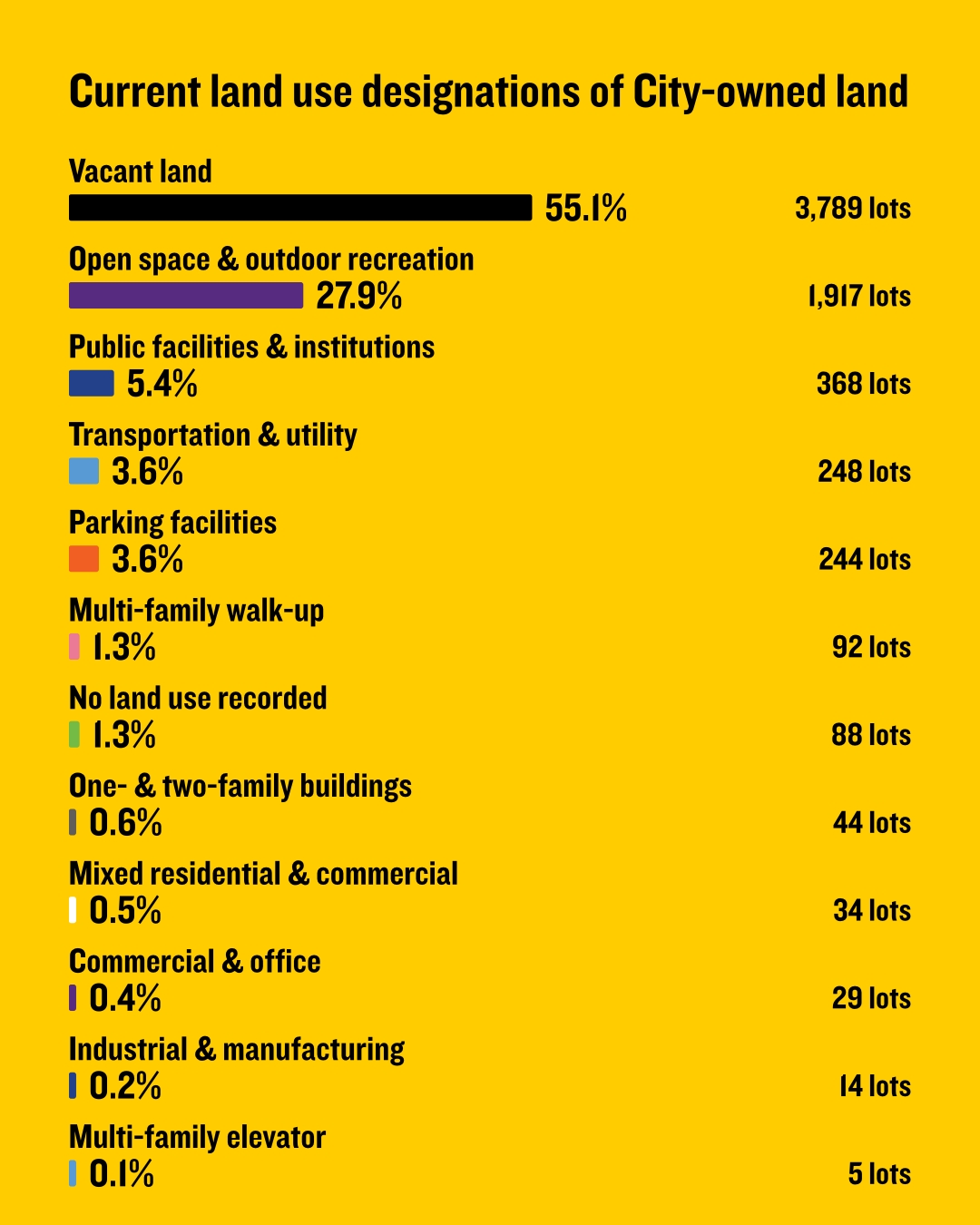
What are the sites currently being used for?The majority of lots under 10,000 square feet citywide, around 55%, are listed as vacant, according to PLUTO. The rest are currently used in some capacity.
Among the lots in use, the majority are used for open space and outdoor recreation. Smaller numbers are used for a range of other purposes, from parking to residential to commercial and industrial. This data challenges the narrative that lots under 10,000 square feet are surplus and only have value as a revenue source.
Public Land for Public BenefitProtecting Outdoor Spaces, and Creating New Ones
Many Parks-owned properties are not mapped as parkland, which means they could be vulnerable to sale. Mapped parkland is protected by the public trust doctrine and must be alienated by an act of legislation before it can be redeveloped or sold. But of the Parks-owned lots under 10,000 square feet, over 60%, or 1,505 lots, appear under regular zoning rather than park zoning. These may be in use for community gardens, recreation, or other public uses, or they may be other Parks department facilities, or they may be vacant. Those vacant lots hold untapped potential for new outdoor spaces.
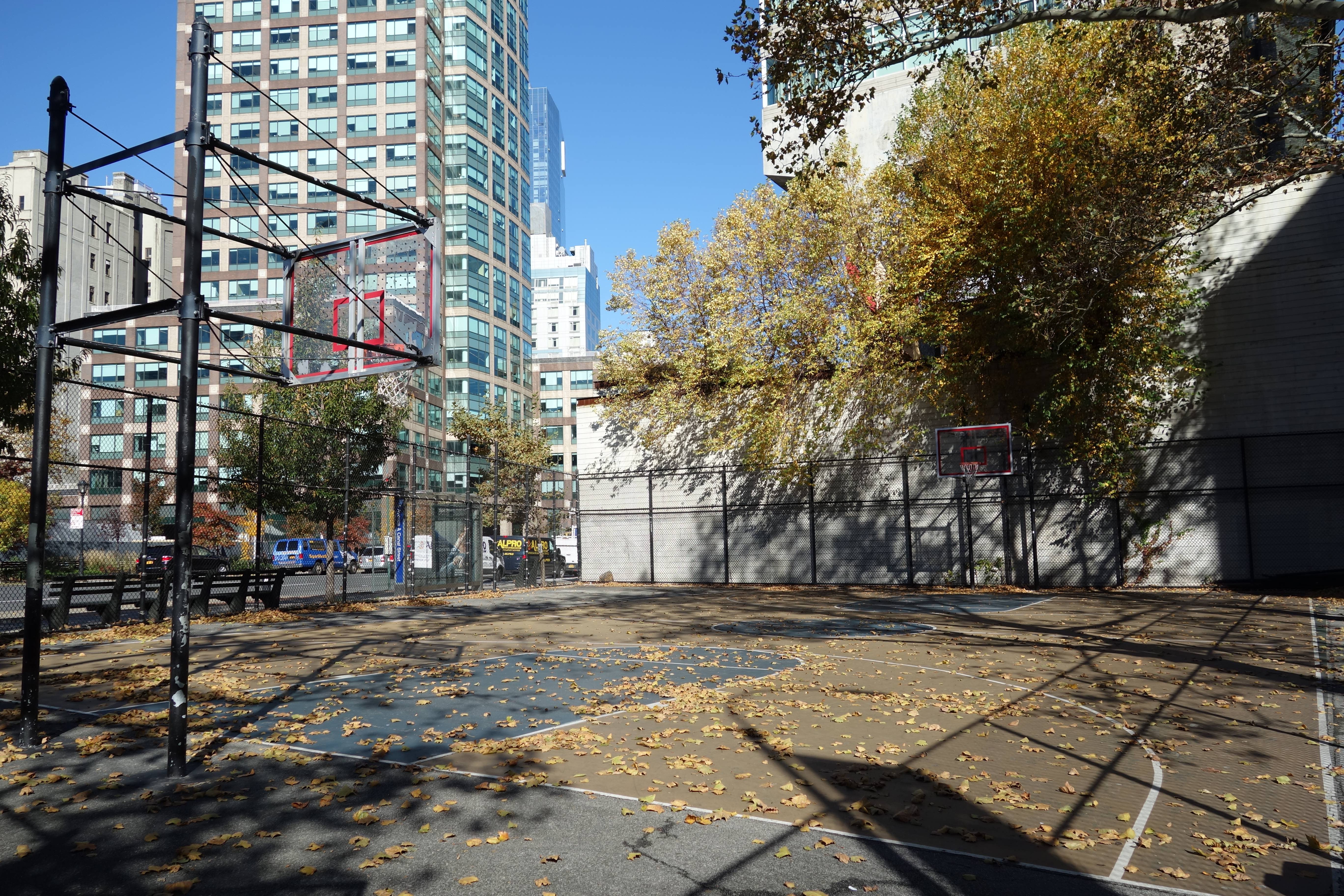
Gardens as Neighborhood ResourceAmong the Parks-owned lots that are not mapped as parkland, 42% are currently being used as gardens. Another 41% are vacant, signaling the potential for more gardens and green spaces on already available land.
The city has one of the largest networks of community gardens in the country, many of which are administered by and on land owned by Parks through the Greenthumb program. Some community gardens span several lots, while others are contained on one parcel.
Community gardens are vital green spaces, but because they are not mapped parkland, they are also vulnerable to sale. Past mayors have attempted to sell or redevelop the City’s community gardens; the charter revision would make it easier for future administrations to do so.
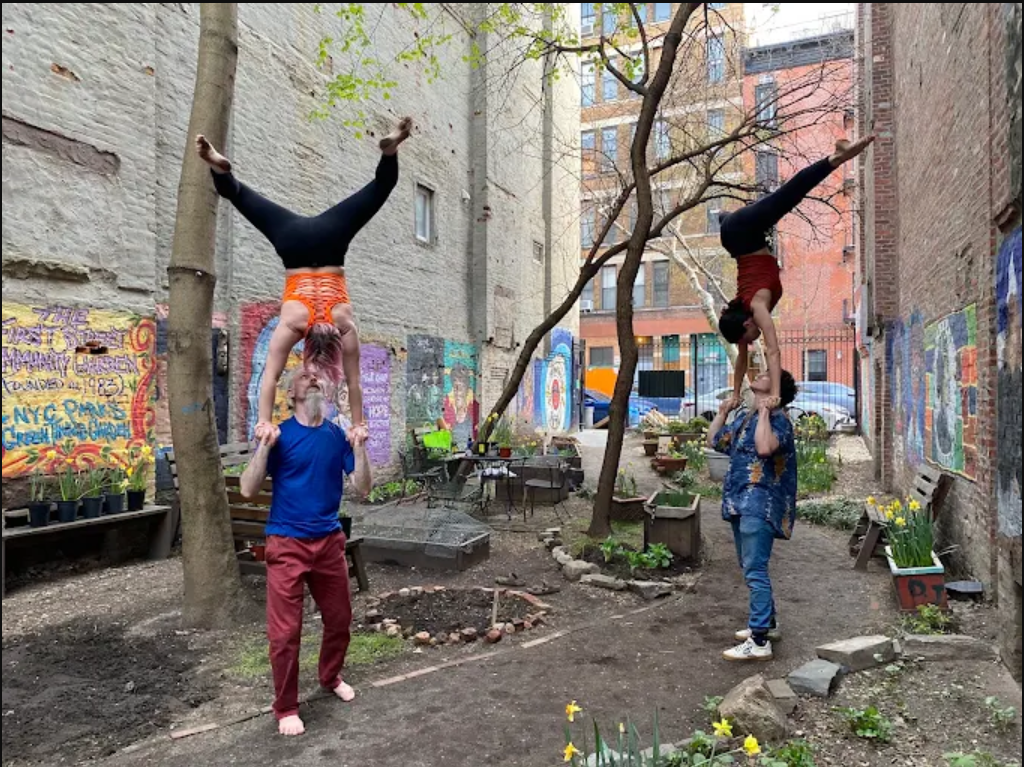
Small Lots. Big Impact.Even small parcels can be leveraged to advance the City’s housing goals. While not the most common use type, almost 200 City-owned lots under 10,000 square feet currently have some type of residential building. City Council Speaker Julie Menin has released a plan to change building rules and incentives to allow for easier residential construction on small, narrow, or irregularly shaped parcels, which would allow for about 35,000 new homes without requiring rezoning. This would make City-owned parcels between 5,000 and 10,000 square feet even more viable for affordable or market-rate housing development.
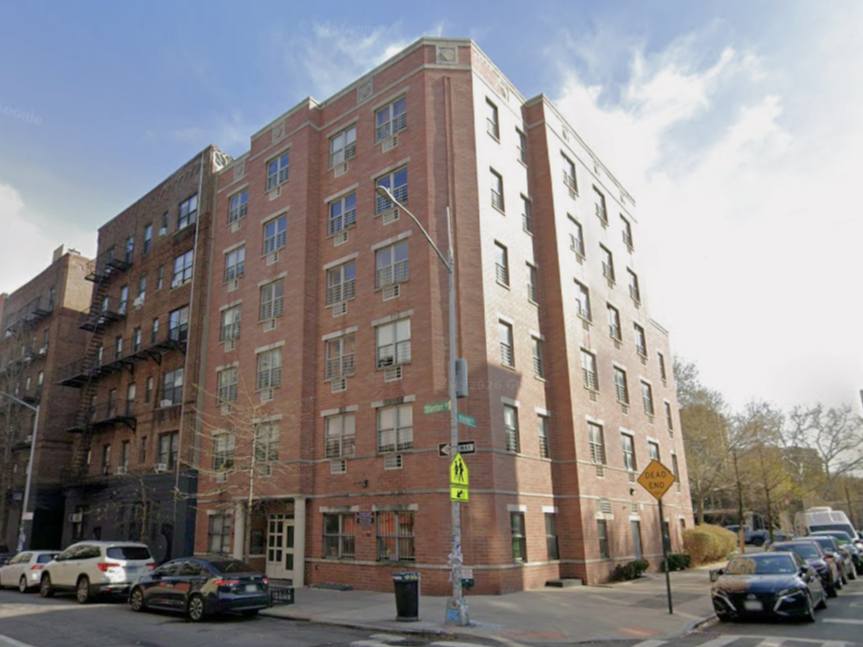
At the same time, adjacent lots can be merged to create larger building lots. That is the case with proposed Park Edge affordable senior housing project at 542 Dean Street in Brooklyn, which would span several unused lots of approximately 4,500 square feet each, totaling around 17,000 square feet. As written, the charter revision would not prevent the City from selling a group of lots that individually are each under 10,000 square feet but together are appropriate for a much larger development. This represents another potential missed opportunity for creating housing on City-owned land.
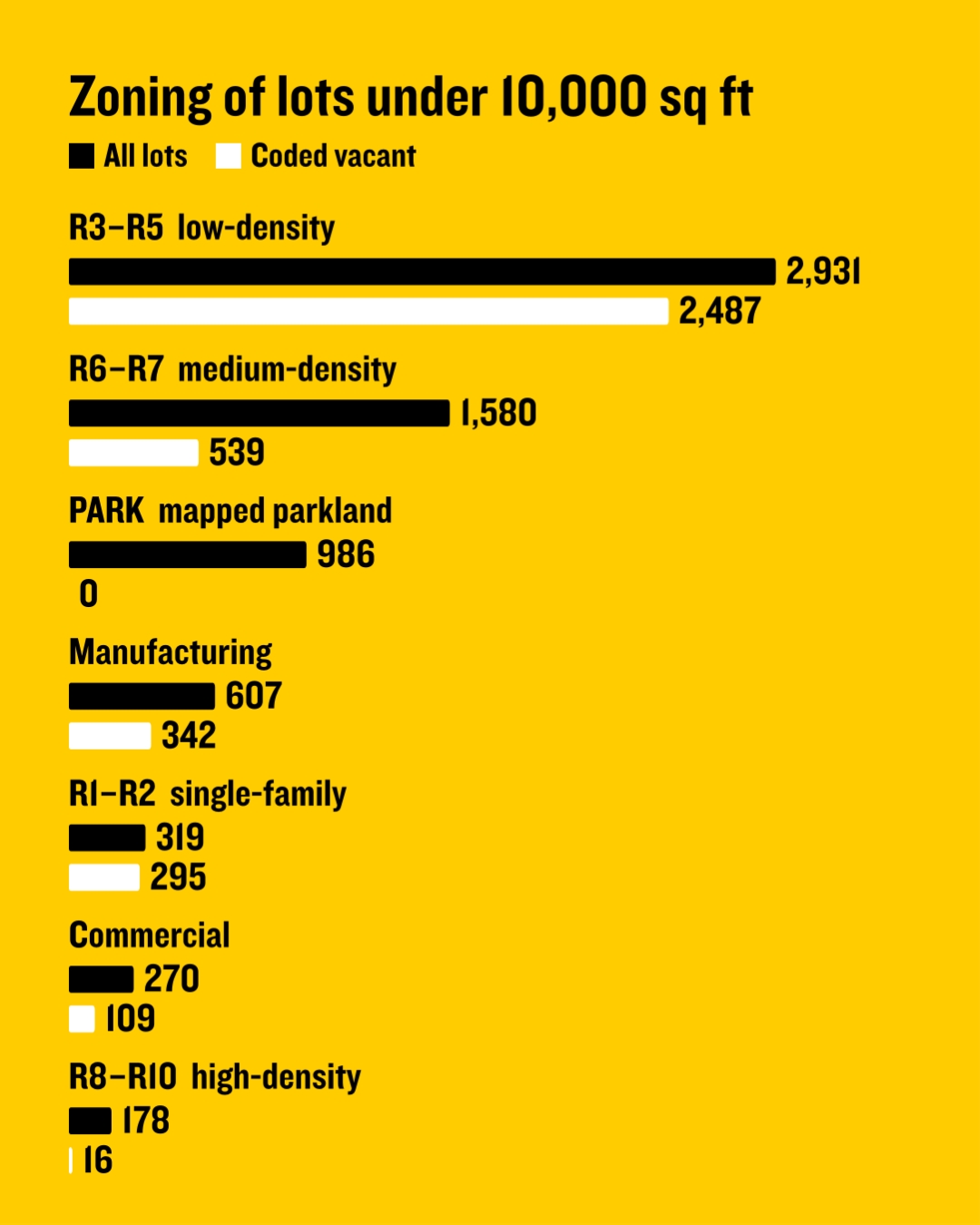
More than half of City-owned lots under 10,000 square feet are already zoned for low- or medium-density residential buildings, which can be built on parcels of this size.
Conclusion
- The charter revision is expansive: Expedited disposition would apply not just to a small number of surplus lots, but to more than half of City-owned properties.
- Lots under 10,000 square feet are useful and should not be automatically considered “surplus”: Currently, these lots are being used for a wide range of City purposes and could be further developed to meet the needs of our communities— from affordable housing to parks to facilities and climate infrastructure.
- The charter revision threatens existing public resources: Under the revised charter, thousands of public properties including green spaces and community gardens would be vulnerable to sale without critical input from City Council for how these spaces could best serve their local communities.
- There is a public need for this land: The expedited sale of 10,000 square foot lots would miss vital opportunities for building new green spaces and affordable housing on City-owned property.
The bottom line:
The data clearly illustrates that lots under 10,000 square feet have value beyond revenue generated by expedited dispensation. The thousands of <10,000 square foot City-owned lots across the city have real potential to serve as housing, public space, and climate infrastructure across all five boroughs.
This charter revision would take properties that could be put to beneficial public use and make it easier for them to be sold without a thoughtful review of those opportunities.
Publicly owned land must be leveraged for the public good. We urge New Yorkers to vote NO on question #3 on election day.