President’s Letter: August 2026
This summer has been relentless. Heat waves, flash floods, overwhelmed storm drains—the kind of weather that turns a commute into an ordeal and a basement into a disaster. While these incidents no doubt inconvenience us all, they also bear more serious ramifications for the future of our city.
Climate risk is an ever-growing concern for New York, one that has led us to reflect on the ways MAS has protected our city in the past and how our work must protect its future.
It has become impossible to talk about preservation without talking about climate change, just as it has become impossible to talk about climate resilience without considering the needs of historic buildings and landscapes. Our city’s pre-1960 building stock, which makes up an estimated 80 percent of the buildings standing in New York today, is aging into conditions it was never designed to withstand. Flood damage compounds while repair and insurance costs rise. Without intervention, buildings that have stood for a century may find the costs of maintenance insurmountable.
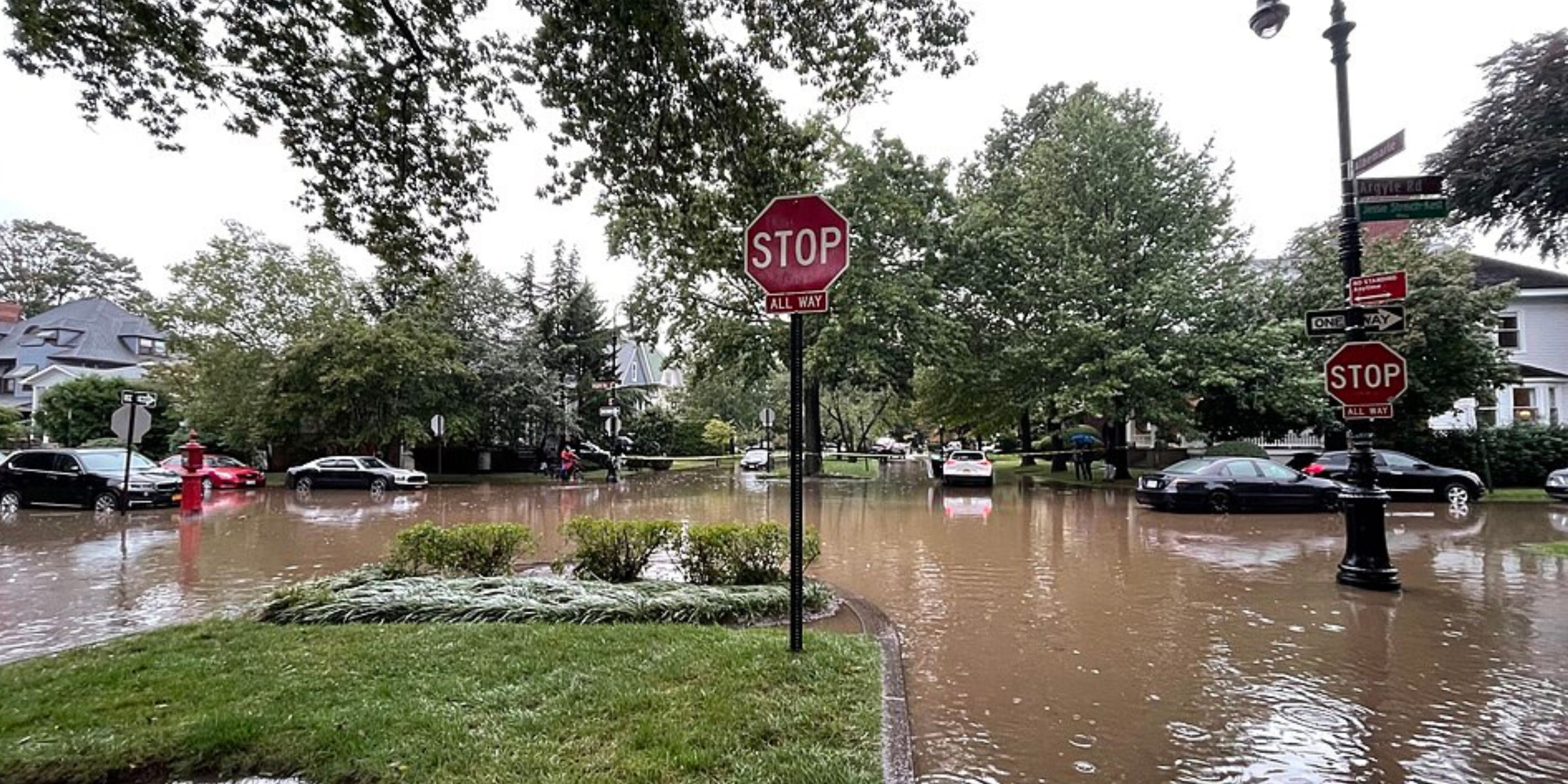
This month, our Data Distillery—a multimedia series that simplifies complex publicly available data to clarify a dilemma unfolding within our city—highlights this issue. What does the data tell us about flood risk and the city’s historic building stock? Closing the preservation policy gap for older, non-landmarked buildings, matters as much for housing stability as it does for historic character.
MAS has also been focused on making it easier for community groups to steward the public realm. Many of these frontline organizations are providing services that will help make our public spaces more resilient to climate risks. MAS testified before the Commission on Government Efficiency, urging that processes initially designed to mitigate risk of commercial concessions shouldn’t be standing in the way of civic stewardship. We strongly believe that, as the administration works to improve government efficiency, it must ease the burden on the organizations that are caring for public open spaces.
Whether a flooded basement or a stalled community program, the throughline is the same: the systems New York relies on were not built for the pace of change we’re now living through. MAS is working to ensure they catch up.
Become a member and get inspired!
Related Initiatives
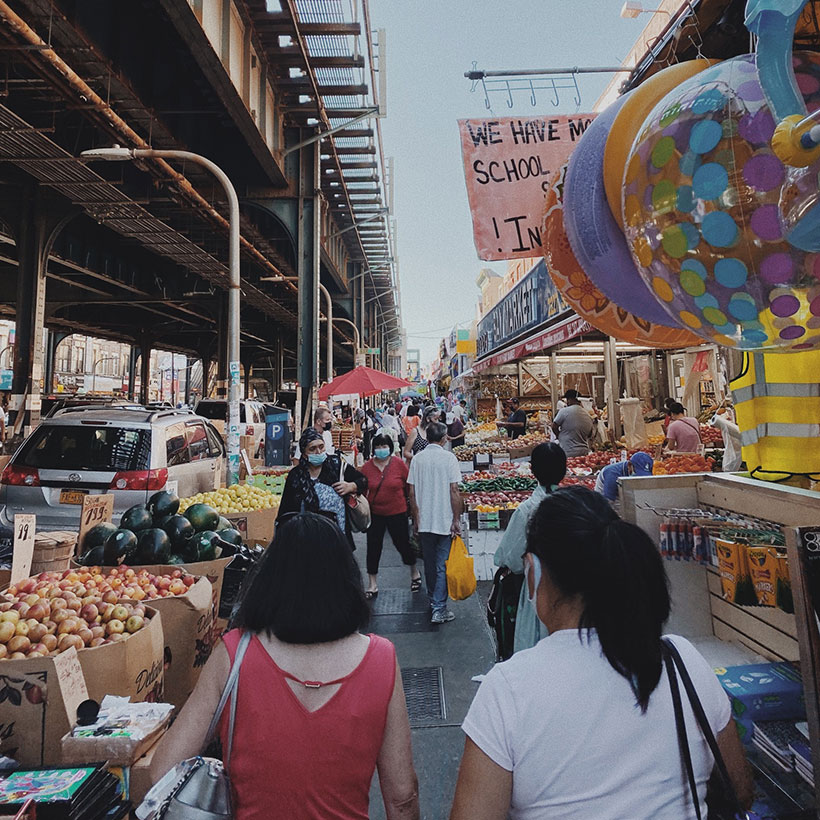
Supporting, celebrating, and preserving diverse cultural heritage throughout NYC
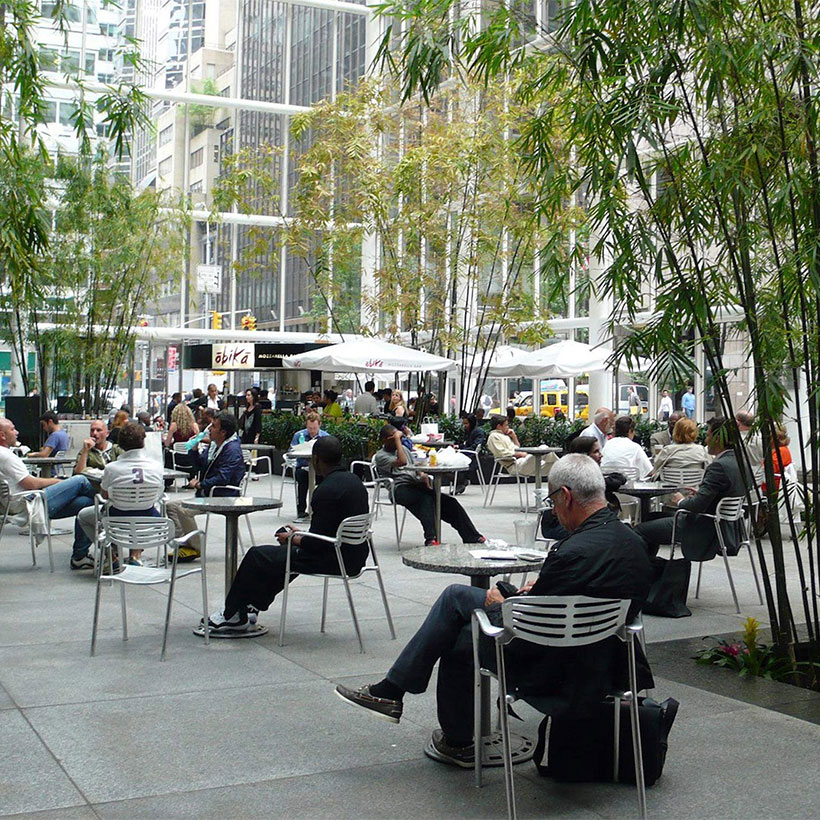
Protecting New York’s 80-acre network of public plazas and arcades