Protect our Public Assets: Vote NO on Ballot Question #3
This November, New Yorkers will vote on five ballot measures proposed by the City Charter Revision Commission on Government Efficiency (COGE).
While The Municipal Art Society of New York (MAS) generally supports efforts to streamline government processes for the public good, and we support the land use proposals in ballot questions #1, 2, and 4, MAS recommends voting NO on Question #3.
What does Question #3 propose?
What you will see on the ballot:
“Simplify review of street safety projects to reduce construction timelines. Fast track disposition of unused City property with approval from City Planning Commission. Expedite leasing offices used for City workforce.”
Question #3 is in fact three proposed charter revisions in one, each of which is focused on speeding up a different government process and eliminating review steps:
1. Street Safety: Currently, the Department of Transportation (DOT) must notify local elected officials and Community Board members and consult with other agencies before starting major transportation projects. In order to make DOT more responsive to street safety needs, this section of the text proposes to allow DOT to start work on street improvements immediately, without conducting a review process, when they are determined to be necessary based on safety data.
2. Sale and Lease of City Property: Today, the sale or leasing of City-owned property must go through the Uniform Land Use Review Process (ULURP), with final approval by the City Council. This section of the proposed charter revision would allow the sale of lots under 10,000 square feet and development rights on City-owned landmark sites to be sold through the shorter Expedited Land Use Review Process (ELURP), without requiring City Council approval. It would also permanently authorize the sale of “undevelopable” lots directly to adjacent lot owners without public bidding.
3. Office Leasing: The acquisition of new office space for City employees requires a notification and hearing process that culminates in a final approval from the City Council and City Planning Commission. This section of proposed revisions would change this process so that an acquisition would be certified by the Department of Citywide Administrative Services (DCAS) Commissioner, who would notify local elected officials as well as the City Council and Comptroller, without a hearing and approval requirement.
These three components of Question #3 are presented as ways to make City processes more efficient, and delivering faster street safety projects has merit. However, Question #3 also raises a critical concern: it could make it easier to sell or transfer valuable public land and development rights without sufficient safeguards to ensure lasting public benefits.
Public land should serve the public.
New York City’s public land is one of its most valuable—and finite—resources. Once sold or transferred, it can be difficult or impossible to reclaim. Decisions about its future should be guided by a comprehensive, long-term vision for the public good, not simply by opportunities to generate revenue or expedite transactions.
While the ballot proposal implies these City-owned lots are surplus, MAS research has shown that these lots, which range in size up to 10,000 square feet, have potential for big impact towards addressing urgent needs, from permanently affordable housing to parks, community gardens, green infrastructure, and flood mitigation. Realizing that potential requires a clear plan and strong public-benefit requirements before land is sold, leased, or transferred.
We should not fast-track the disposition of public assets without first establishing clear standards for how they will benefit New Yorkers.
What should happen instead?
Before the City moves forward with expedited sales, leases, or transfers of public land and development rights, MAS calls for a stronger framework that prioritizes community needs, affordability, and long-term public value.
1. Prioritize community-based affordable housing. Give preference in the sale or ground lease of larger City-owned parcels—for example, those measuring 5,000 to 10,000 square feet—to community development corporations (CDCs), nonprofit developers, community land trusts, and other mission-driven entities committed to permanent affordability and community needs.
2. Expand access to long-term, affordable ground leases. Make City-owned land available through low-rent, long-term leases to community-based and nonprofit developers committed to delivering lasting public benefits, with administration by appropriate City agencies, including the New York City Economic Development Corporation (NYCEDC) and the Department of Housing Preservation & Development (HPD).
3. Strengthen affordable housing requirements. Establish enforceable deed restrictions and deeper affordability requirements for housing developed on City-owned land, ensuring that public property supports long-term housing affordability.
4. Prioritize land for parks and climate resilience. Designate smaller parcels—for example, those measuring 1,750 to 5,000 square feet—for green infrastructure, flood mitigation, pocket parks, and community gardens. Where appropriate, support community land trusts, the Department of Parks & Recreation’s GreenThumb program, and the Department of Environmental Protection (DEP) in managing these spaces, with particular attention to neighborhoods with less than 2.5 acres of open space per 1,000 residents. MAS’s recent research on pocket parks, defined as those under 1.7 acres, shows that these small open spaces enrich urban life, especially in densely populated neighborhoods with limited access to other public green space.
5. Link development rights transfers to greater public benefits. When development rights from City-owned landmarks are transferred to other sites, require meaningful affordable housing commitments at the receiving sites, in addition to protecting the landmark itself.
We have one chance to get this right.
The Mamdani Administration has the opportunity to lead the way toward setting requirements that will ensure long-term use of public land for the benefit of the public — protections that will go beyond the current administration.
New York City needs a thoughtful, transparent strategy for using its public land to meet the needs of current and future generations. Streamlining government processes should not come at the expense of public accountability or lasting community benefits.
Our public assets should work for the public. Vote NO on Question #3.
Become a member and get inspired!
Related Initiatives
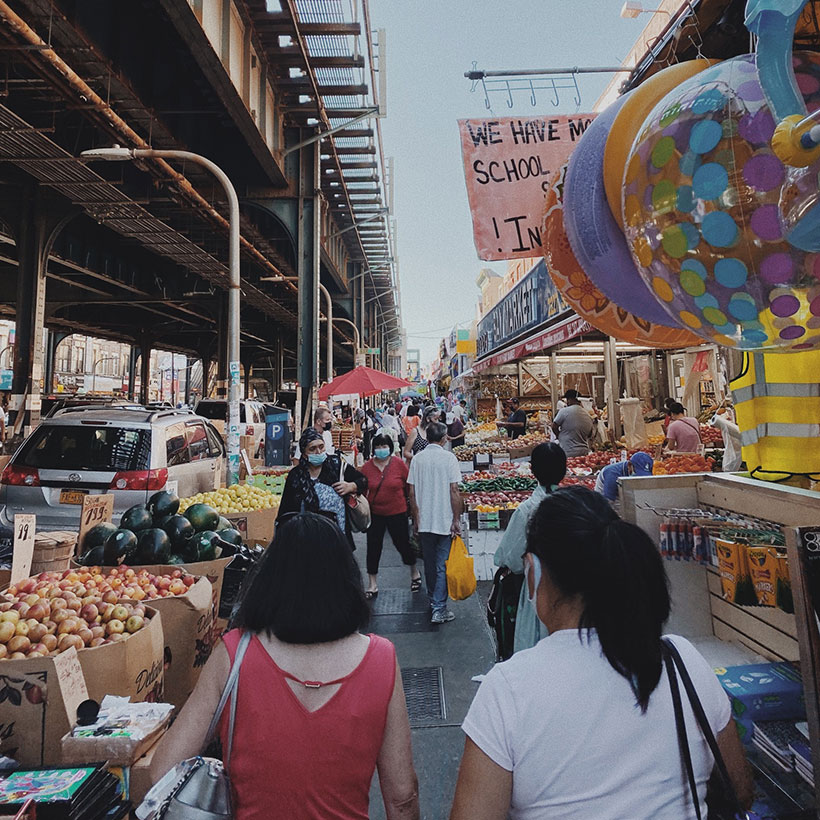
Supporting, celebrating, and preserving diverse cultural heritage throughout NYC
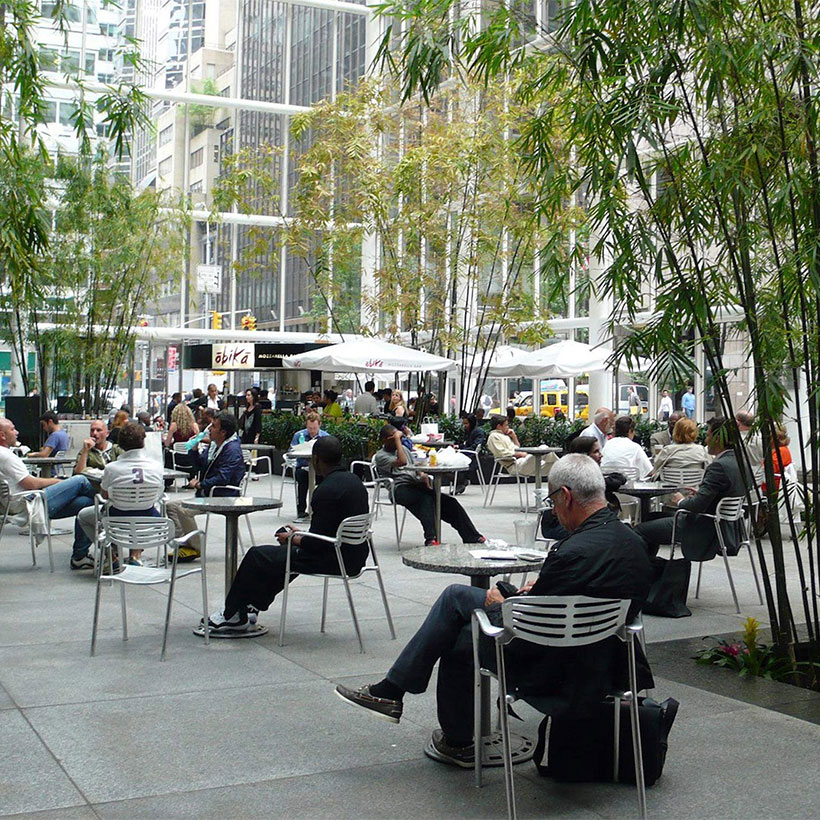
Protecting New York’s 80-acre network of public plazas and arcades