President’s Letter: September 2026
Twenty-five years ago, in the weeks after September 11, the Municipal Art Society joined fellow New Yorkers in grief and grappled with questions around healing, commemoration, and rebuilding. With a strong conviction that plans for the future of Lower Manhattan must include broad input from the public, MAS led a massive civic engagement project, Imagine New York: Giving Voice to the People’s Visions. MAS and partners convened thousands of New Yorkers in workshops, conversations, and a process that reached across the tri-state region to ask some big questions: How can our city rebuild? And what do New Yorkers themselves envision for the impacted neighborhoods, and for each other, in the years ahead?
The most visible outcome of this process is the Tribute in Light, the iconic twin-beam light installation designed by John Bennett, Gustavo Bonevardi, Richard Nash Gould, Julian Laverdiere, and Paul Myoda, with lighting consultant Paul Marantz.
Another lasting outcome from Imagine New York is the value of visioning exercises and community engagement in urban planning. Imagine New York emphasized that the city needed more than just physical rebuilding. It needed the people who live in it to have a real hand in shaping what comes next.
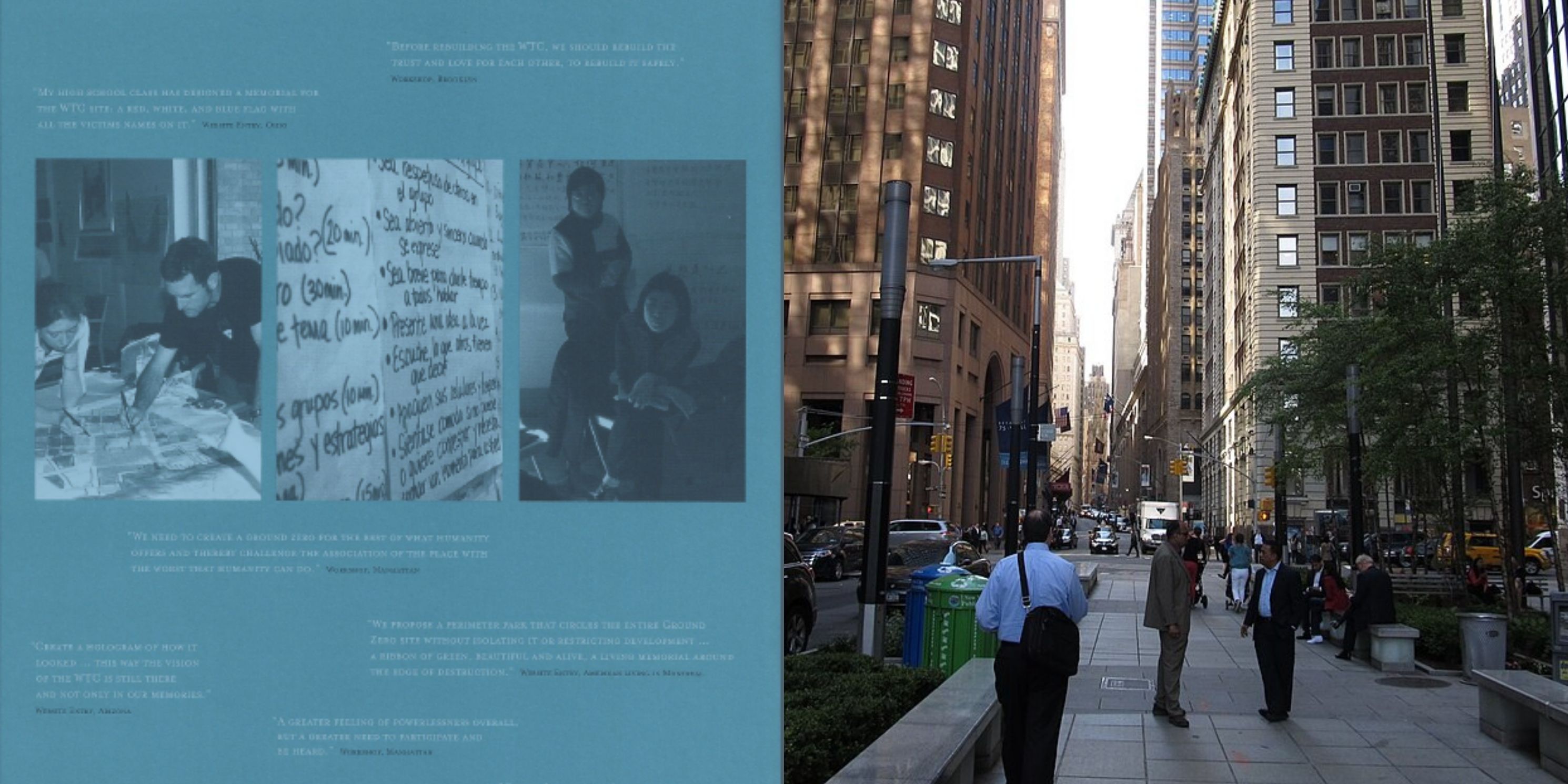
A quarter century later, most of the physical rebuilding has transpired, and what’s been built includes many of the recommendations that came out of Imagine New York. The World Trade Center complex and surrounding areas include enduring places of remembrance and commemoration, architectural icons and office towers that shape the skyline, and public open spaces where people gather to socialize or just enjoy an outdoor lunch.
In addition to redevelopment at the World Trade Center site, we’ve seen significant changes in the nearby Financial District. The residential population has more than doubled since 2001, and our streets and public spaces are being used in different ways as a result. Tourism has returned and remains strong (if not yet to pre-pandemic levels), filling a neighborhood of narrow, historic streets with a lively bustling of foot traffic. And while congestion pricing has provided some relief to vehicle congestion, there is room for improvement to the public realm—from streetscape design and traffic flow, to wayfinding and garbage management.
With all that’s been built and rebuilt in Lower Manhattan, there are undeniable growing pains. The questions asked during the era of Imagine New York need fresh responses—from the people in the midst of this continued transformation now.
Twenty-five years later, the lights still turn on each September, and we still believe in listening.
So we’re asking you a question that often gets floated around our office, here in the Financial District:
What does Lower Manhattan’s public realm need now, a quarter century into its rebuilding? Share your thoughts in a short survey.
Become a member and get inspired!
Related Initiatives
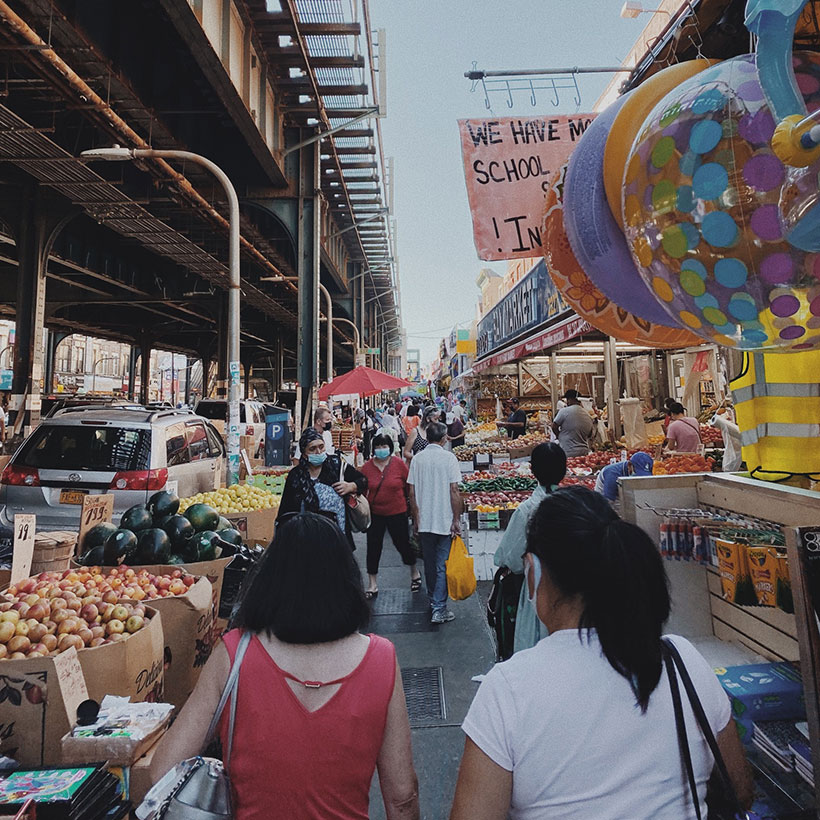
Supporting, celebrating, and preserving diverse cultural heritage throughout NYC
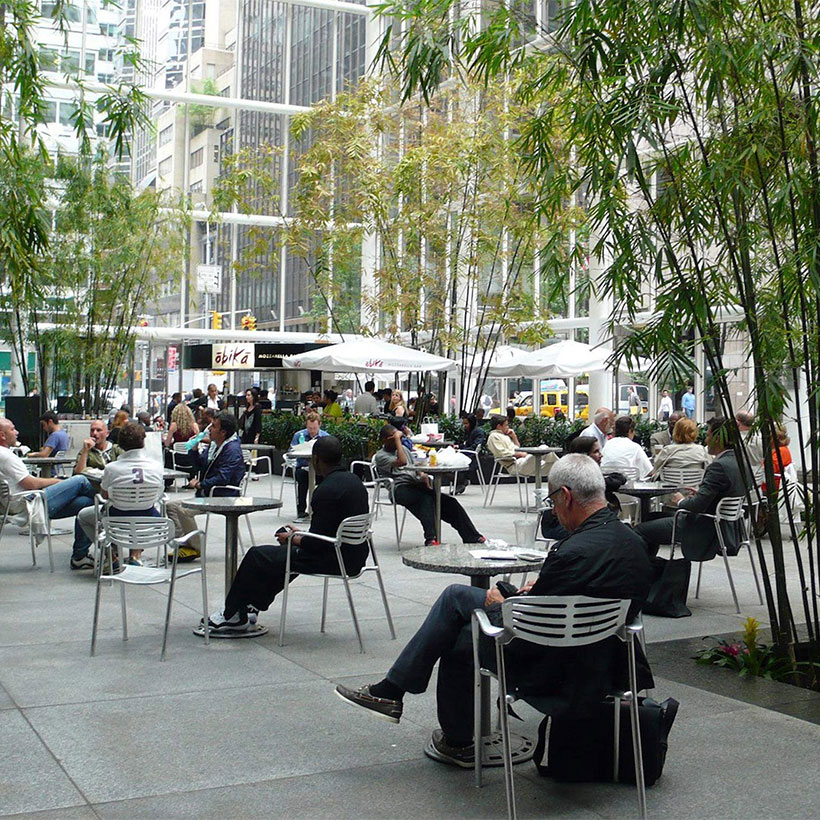
Protecting New York’s 80-acre network of public plazas and arcades