Public Access is a Public Right at Bridgemarket Plaza
The ongoing lawsuit related to the public use of Bridgemarket reflects a concerning citywide trend in which private property owners who are obliged to maintain public spaces fail to do so. The acknowledgement by Guastavino’s that the plaza is public, and the removal of misleading private property signage is a positive step forward, but just a start. We are heartened to see that New York City Council Speaker Julie Menin is invested in the outcome of this matter, which is happening in her home district. The Municipal Art Society of New York (MAS) encourages Guastavino’s, the City of New York, and the plaintiffs in the litigation to reach an amicable resolution that ensures that the plaza is not just accessible, but a well-maintained and inviting outdoor space for the community.
MAS has a special interest in the Bridgemarket plaza, located on Department of Transportation (DOT)-owned property beneath the Queensboro Bridge, as it is the site of the Evangeline Blashfield Fountain, a public artwork linked to two moments in MAS’s history. The fountain was first conceived of and paid for by Evangeline Blashfield (1857-1918), a founder of MAS and the first woman on our board of directors. In 2003, MAS had the Blashfield Fountain painstakingly restored under its Adopt-A-Monument program and returned to the outdoor plaza at the new Bridgemarket development, near its original location.
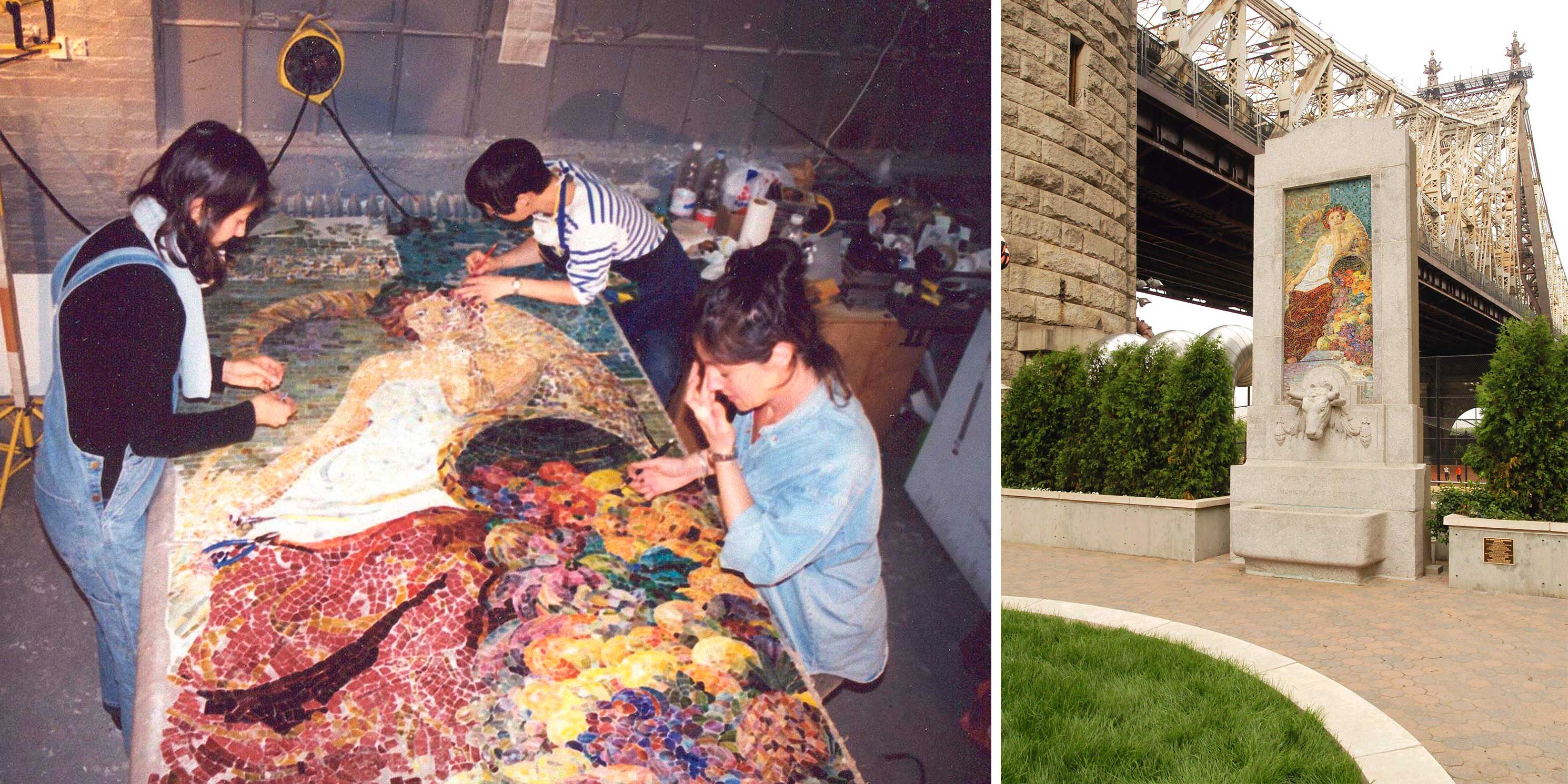
The Bridgemarket site was originally home to a fruit and vegetable market that convened under the Queensboro Bridge until the 1940s, after which time the lot was taken over by DOT and used by City agencies primarily for storage and parking. It was redeveloped in the late 1990s by Bridgemarket Associates, under an arrangement whereby a master leaseholder would operate retail stores on the site while the City retained ownership of the land. At various stages of planning and development, documents and official statements repeatedly reference that a key element of the site would be a landscaped outdoor plaza to be maintained for use by the public. The lease between the City and MADDD 550 Broad LLC (the master leaseholder from whom Guastavino’s and the other Bridgemarket businesses sublet) confirms that one of the tenant’s obligations is to operate a seating area accessible to the public in the plaza.
We urge Guastavino’s to meet its obligation to maintain the Bridgemarket plaza as the neighborhood amenity it was intended to be. The acknowledgement that the plaza is public is a positive first step. But additional steps are necessary to ensure that the space is open to the community, to shoppers at the other Bridgemarket stores, and to New Yorkers at large. That means removing landscaping that narrows the entry and blocks sightlines, adding new signage that clearly welcomes the public, and ensuring adequate seating. We hope for a quick and positive resolution to this matter.
MAS has an enduring commitment to the effective planning, investment, and management of New York City’s public spaces, including our longstanding work to improve the design and enforcement of Privately Owned Public Spaces (POPS), our work as founding members of the Alliance for Public Space Leadership (APSL), and perennial advocacy for comprehensive planning. As part of this work, we believe that across the board the City must do more to ensure that public spaces with unique ownership, operations, and maintenance structures are able to be accessed and activated as intended. This case underscores this need and makes clear that the City requires better enforcement mechanisms for cases when private business owners encroach on public space.
At the re-dedication ceremony for the Blashfield Fountain in 2003, MAS lauded the “new public plaza” that was part of the redeveloped site. Indeed, MAS’s intention in placing the fountain at this site was that it be returned to a location where it would be seen and enjoyed by all. MAS is committed to protecting accessible outdoor space as a critical component of the public realm. Public spaces are integral to the fabric of the city; we must ensure that private developers who have an obligation to create and maintain these spaces continue to do so.
Become a member and get inspired!
Related Initiatives
Supporting, celebrating, and preserving diverse cultural heritage throughout NYC
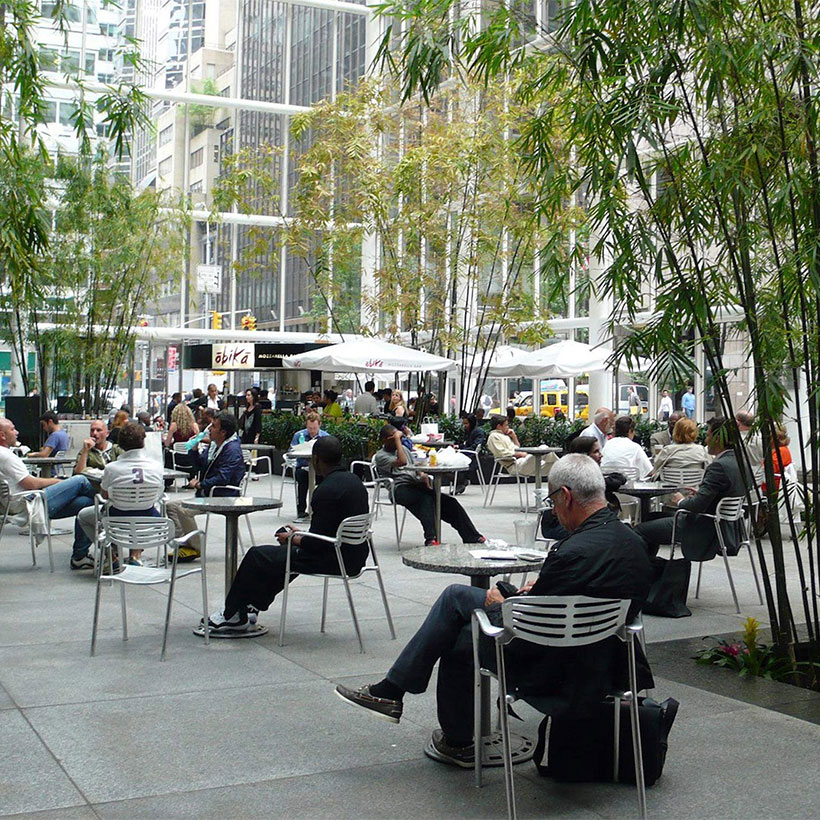
Protecting New York’s 80-acre network of public plazas and arcades