President’s Letter: February 2026
To kick off the 2026 MAS public realm agenda, last week we hosted an MAS Member Policy Breakfast focused on Privately Owned Public Spaces (POPS). The room was packed with urbanists who are enthusiastic about creating better public spaces. Thank you to Harvard professor Jerold S. Kayden, designer Thomas Balsley, and Department of City Planning Manhattan Office Director Erik Botsford for sharing their expertise and ideas for transforming underutilized POPS to better serve a changing city.
POPS (Privately Owned Public Spaces) were introduced in 1961 as an incentive for developers to provide publicly accessible plazas, arcades, and outdoor spaces in exchange for additional floor area or special waivers. POPS regulations have been updated several times to enhance their design, use, and maintenance practices. Many of these spaces became vital to New Yorkers living and working in the urban environment. Significant updates were made in 1975 thanks to former MAS Board member William H. “Holly” Whyte’s Street Life Project. And in the late 1990s, Professor Kayden and MAS conducted research and partnered with the Department of City Planning to advocate for further design and policy updates.
-
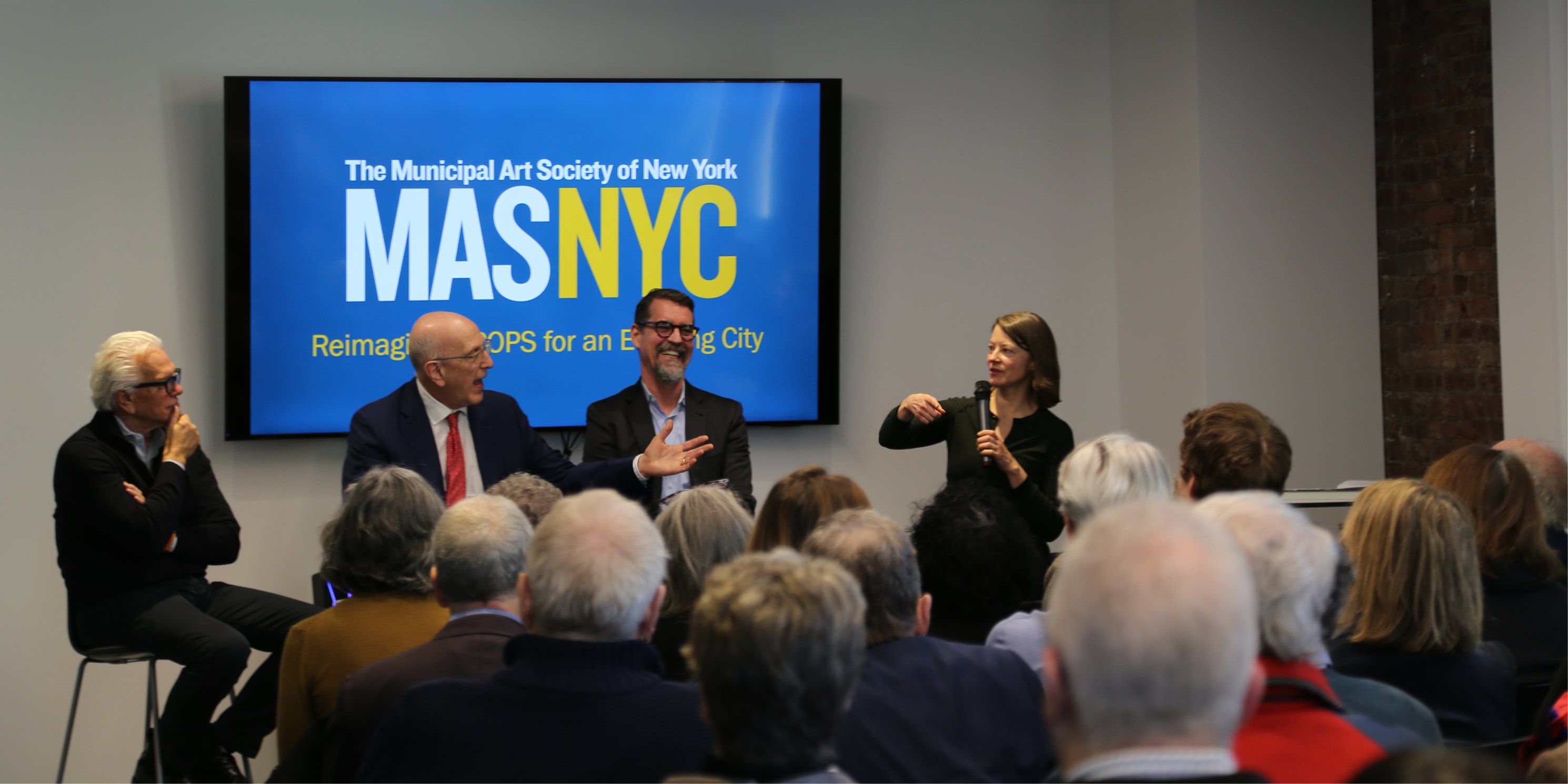 Panelists speaking at MAS Member Policy Breakfast: Reimagining POPS for an Evolving City in February 2026. Photo Credit: Genevieve Wagner.photo 1 of 4
 -
 Audience members at MAS Member Policy Breakfast: Reimagining POPS for an Evolving City in February 2026. Photo Credit: Genevieve Wagner.photo 2 of 4
 -
 Audience members at MAS Member Policy Breakfast: Reimagining POPS for an Evolving City in February 2026. Photo Credit: Genevieve Wagner.photo 3 of 4
 -
 Audience question at MAS Member Policy Breakfast: Reimagining POPS for an Evolving City in February 2026. Photo Credit: Genevieve Wagner.photo 4 of 4
The most recent design update was in 2007, nearly 20 years ago. Since then, neighborhoods have been transforming due to rezonings, hybrid work trends, and commercial-to-residential conversions. People also use public space differently now, and those diverse needs have rightly become a focus of study and design. At the same time, the accelerating impacts of climate change require urgent, creative responses to flooding, extreme heat, and strong winds. MAS is excited to be in the vanguard of articulating the urban design and policy changes that will help POPS continue to flourish and meet New Yorkers’ evolving needs.
The main takeaways from last week’s discussion offer direction for our research moving forward. First, we must improve the design and programming of existing POPS, which will require creative thinking given that POPS is an incentive-based program. And, since POPS are only a viable model where land value is high, a significant expansion of these spaces is unlikely; therefore, we need to identify and champion new equity-focused strategies for providing open space, for example Paseo Park in Queens. New stewardship models are needed for all these spaces. We also need to preserve POPS with exceptional design quality. Audience members lamented 77 Water Street and 60 Wall Street as examples of what we risk losing.
I look forward to working with you to advocate for better-designed, better-stewarded public places that we can all enjoy. In the spirit of Holly Whyte, go forth and triangulate! (IYKYK)
Learn more about our Public Realm Action Plan, here, flip through photos of our POPS policy breakfast, here, and read up on Paseo Park, here.
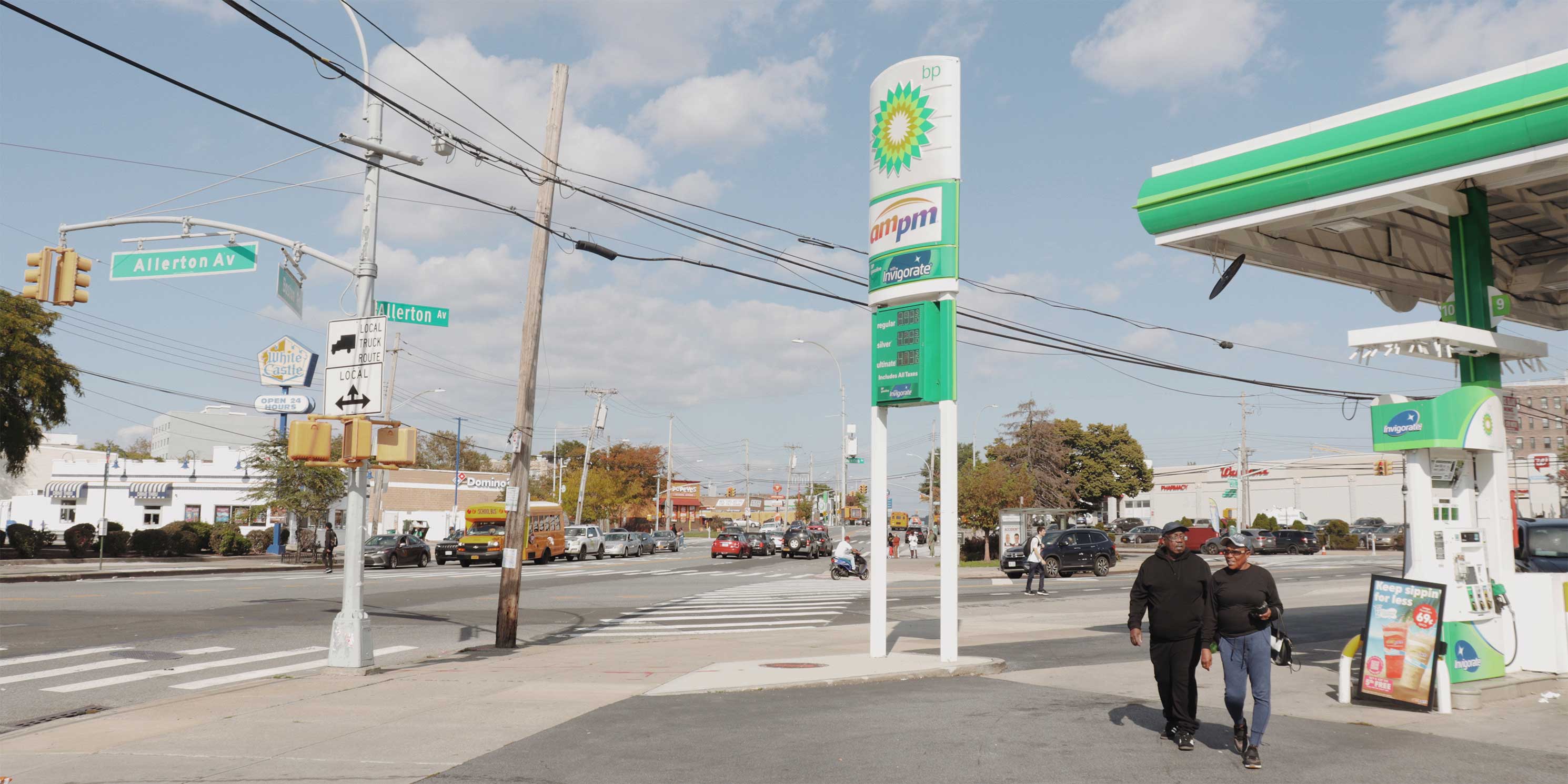
Rethinking New York City’s Arterial Roadways.
Related Initiatives
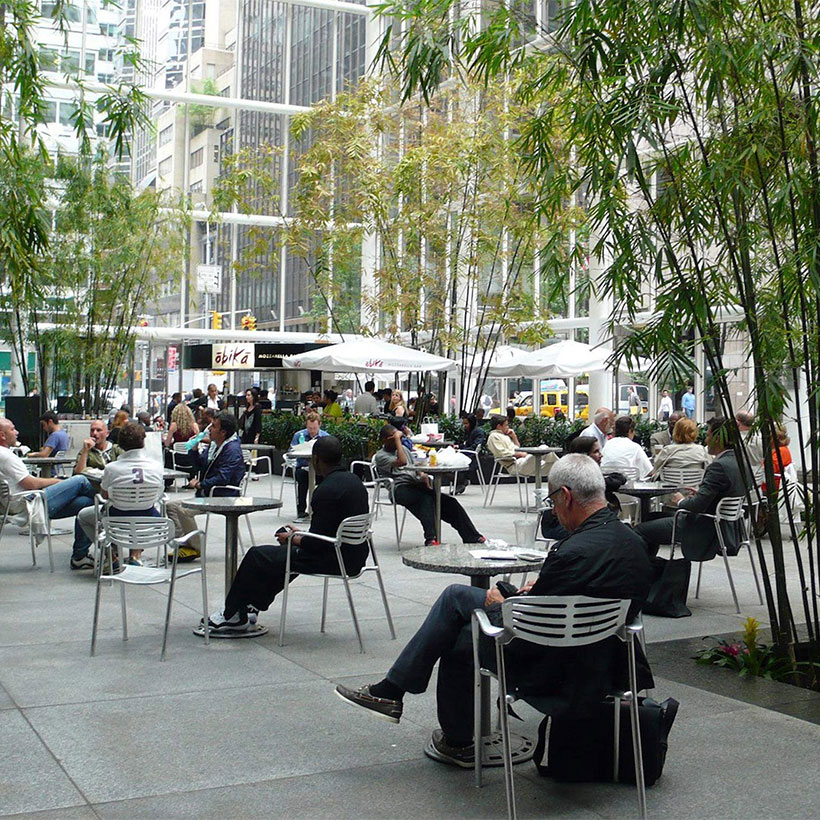
Protecting New York’s 80-acre network of public plazas and arcades